
Every Story Matters
Every experience with stomach cancer is different, but sharing those experiences can help others feel informed, understood, and connected.
Debbie’s Dream Foundation brings together stories from patients, survivors, caregivers, and families across the stomach cancer community. Whether you are navigating a diagnosis, living beyond treatment, caring for someone you love, or honoring someone whose experience has shaped your own, your perspective can help others know they are not alone.
Explore stories from across the community below, or share your own experience with DDF.
Connect With Someone Who Understands
Sometimes it helps to talk with someone who has faced a similar experience. DDF can help connect you with a member of the stomach cancer community who understands some of the challenges you may be navigating.
Hear More Stories on From the Gut
Personal stories are also at the heart of From the Gut: Real Talk on Stomach Cancer, DDF’s podcast featuring candid conversations with patients, survivors, caregivers, experts, and advocates from across the stomach cancer community.
Stories From Our Community
Modal Title
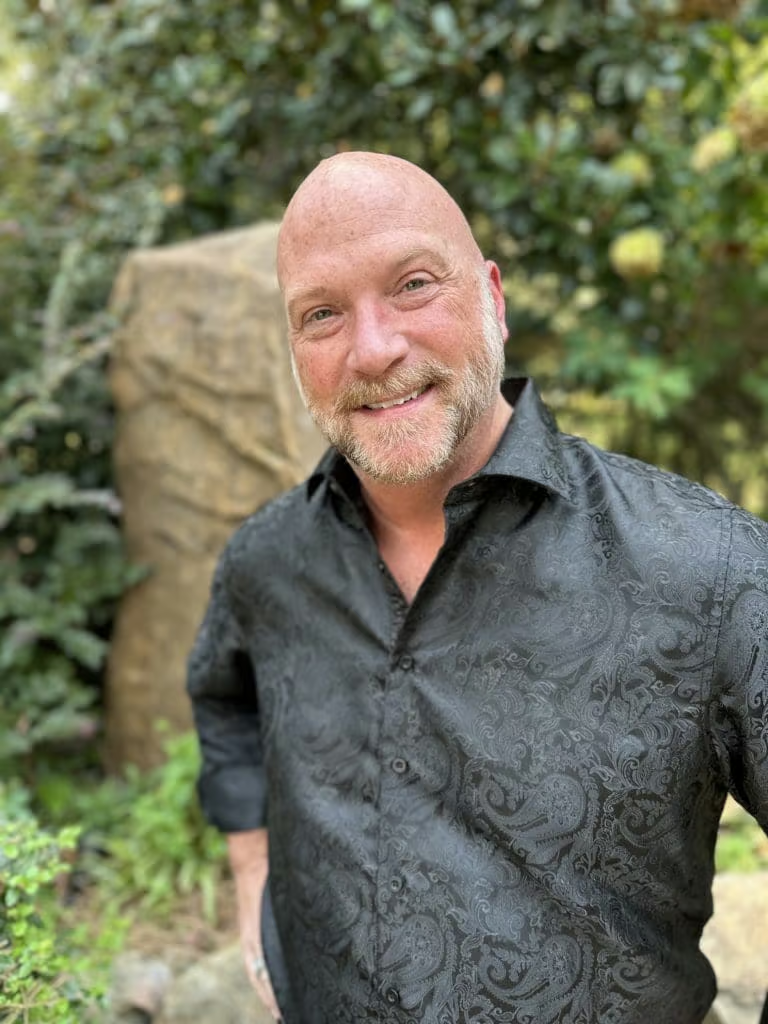
Meet Kermit Farmer, a dedicated patient and caregiver advocate who joined DDF on Capitol Hill for our Annual Advocacy Day, honoring his late wife, Dr. Linda Lee Farmer. Kermit is an author, podcaster, and entrepreneur who continues to keep his wife’s legacy alive.
In his heartfelt memoir, Kermit shares the twenty-year love story between himself and Linda, an oncologist, devoted mother, and passionate friend. From countless attempts to woo a wife who seemed un-wooable to badly timed jokes, Kermit’s story will have you wiping your eyes and rolling with laughter. Linda’s relentless pursuit to love and serve her patients until her last breath is a testament to her strength of spirit, showing that even in the claws of cancer, love and humor can survive.
To read more about Kermit’s journey and his mission, visit the DDF website. You can also find links to his memoir and children’s book:
Modal Title
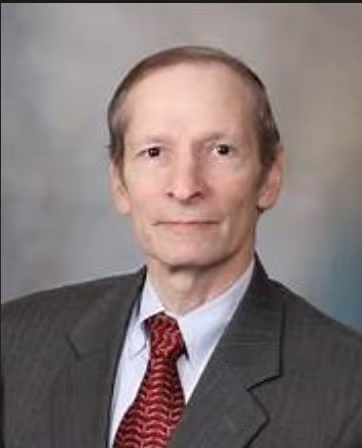
We are honored to share the remarkable story of Dr. John Woog, a retired ophthalmologist from the Mayo Clinic in Rochester, Minnesota, who unexpectedly found himself facing advanced stomach cancer in 2007. Despite facing numerous challenges and setbacks in his treatment journey, including Stage 4 disease with liver metastases, Dr. Woog ultimately found hope through experimental chemotherapy. Since 2010, he has been fortunate to live without evidence of disease.
In collaboration with his wife Maryanna, Dr. Woog published a book titled “Facing Cancer with Hope: Suggestions for Patients, Caregivers, and Patient Advocates Based on a Surgeon’s Own Cancer Journey.” This story offers invaluable recommendations and lessons from their experience, aiming to support and empower cancer patients and their families.
Dr. Woog’s inspiring story and dedication to supporting cancer patients and their caregivers align perfectly with DDF’s mission. We are grateful for his willingness to share his story and support our mission of supporting patient and caregiver education, scientific research, and advocacy initiatives.
Modal Title
I was diagnosed with stage one non-CDH1 gastric adenocarcinoma with signet ring cells on June 16, 2021. This diagnosis came as a complete incidental finding and, of course, shock!
In 2016 I was diagnosed with the stomach bacteria H Pylori after having an upper endoscopy to evaluate the cause of belching and acid reflux. To treat this, I received three rounds of antibiotics to eradicate the bacteria, which was effective. I no longer had any symptoms and moved on with my life. Fast forward to late May 2021. I was eating quickly while working as a nurse in the hospital. I began to choke on the fish and potatoes I was eating and had to have the Heimlich maneuver performed. This scared me so much, and I decided to call my former Gastroenterologist right away. She informed me that many people choke for no known reason and end up being okay. I was not satisfied with this answer, and I insisted that she perform an upper endoscopy. It was during this test that she found a one-centimeter raised lesion in the distal (bottom) part of my stomach. The results came back the very next day, and my path to a cure began.
As a Critical Care Registered Nurse, I have encountered many patients with various types of cancer, but I never recalled caring for someone with gastric cancer. I knew very little about this cancer at the time I was diagnosed. That all changed within 48 hours of my diagnosis. I quickly joined No Stomach for Cancer, Debbie’s Dream Foundation, and Hope for Stomach Cancer to learn more. The knowledge on these sites in invaluable. I scoured the internet, reading study after study. I navigated consults with three separate gastric surgical oncologists within 72 hours of my diagnosis. I attribute this quick action to understanding the medical field and having easy access to all my medical records in the various patient portals. I encourage everyone to utilize their patient portal as well. All medical records are released to you as soon as they are released to your medical team, which is the law in the United States.
The first two consults I had were very hard to hear. Both surgeons informed me I would need four rounds of chemotherapy prior to a partial or total gastrectomy, followed by four more rounds of chemotherapy. They were ready to place a port in me and begin treatment that same week. This is the current standard treatment for gastric cancer in the U.S. I was terrified and could not believe it was possible that this tiny lesion could require such aggressive treatment.
My third consult was with Dr. Sam Yoon, who was, at the time, with Memorial Sloan Kettering in New York City. He was familiar with the protocols utilized in most Asian countries where gastric cancer is much more prevalent and often found in early stages due to early detection and surveillance. He set me up for further testing within 2 weeks, which confirmed the cancer was likely to be stage one. He said we could proceed with a laparoscopic subtotal gastrectomy with a Roux En Y Gastric Bypass right away. A little over a week after surgery, I received a call from Dr. Yoon stating I had clear margins and all lymph nodes removed were negative for cancer! I did not need any further treatment! What a miracle and true blessing. I have so much gratitude for Dr. Yoon and all my medical team members. Recovery was a challenge. While in the hospital, I did well. I had very little pain, and I was up and walking about two hours after surgery. Once home, I began to have a lot of challenges eating, and I suffered from dumping syndrome after eating too much or too many carbohydrates. This continues to this day, but I am able to control it with diet.
Speaking of diet….everyone losses weight after having all or part of their stomach removed. I was fortunate enough to only lose around four pounds from diagnosis to recovery. I attribute this to adding MCT (medium change triglycerides) oil to most of the foods I ate. MCT oil is essential fat from coconuts and is very high in calories. One tablespoon of the oil is 130 calories.
Check out my smoothie bowl recipe I often ate to help maintain my weight.
Please reach out to me if you ever have any questions about my journey. I am doing very well now, gaining weight and back to lifting weights in the gym!
Modal Title
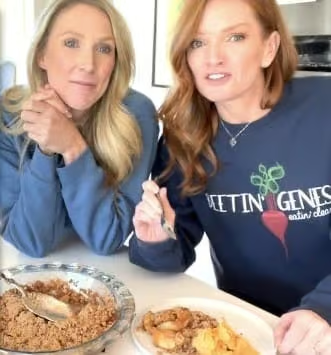
We discovered that we carry the CDH1 mutation in February 2015. Surveillance is the route we chose as a strong family history of gastric cancer did not register in our family tree until recently. With signet cells found on 3 of Polly’s gastric mappings and the news of a distant cousin being diagnosed at stage 4, Polly made the decision to have her total gastrectomy in June of this year. Her recovery thus far has had minimal side effects. At four months post, she is feeling pretty good. This will be her first holiday as a stomachless person, and she looks forward to grazing on all the fabulous foods. Taylor is continuing her gastric surveillance now and feels comfortable with this decision. Her doctor closely monitors her as she continues to lead a healthy lifestyle. Looking forward to seeing everyone’s holiday recipes. I hope your holiday is filled with peace, love, happiness, and full bellies.
Check out our favorite holiday recipes here.
***Connect with Polly & Taylor on Instagram and YouTube @beetingenes, where they share their journey with the cdh1 genetic mutation.
Modal Title
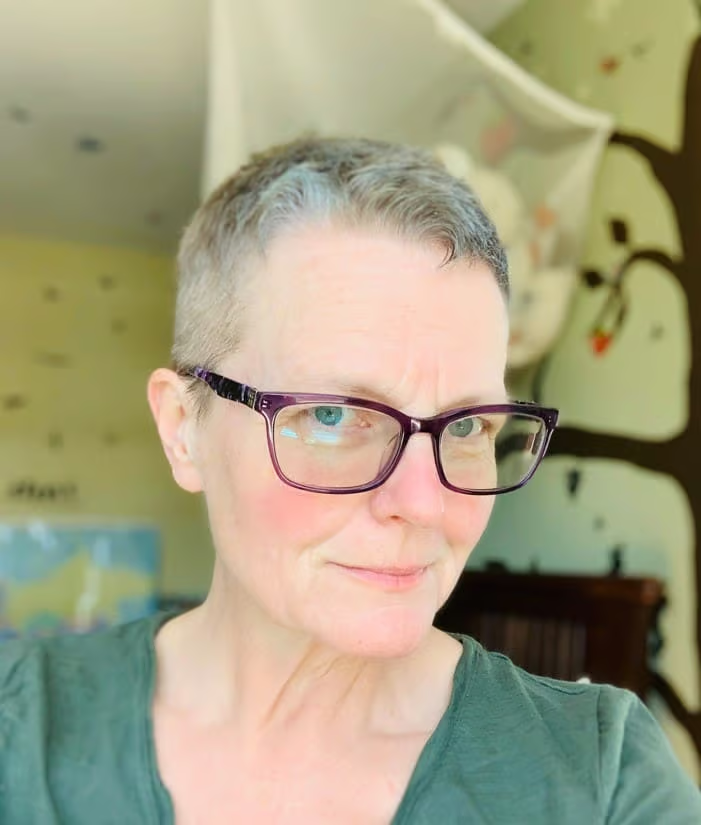
Hi, My name is Amanda Johnson, and I live on Long Island in Sayville. I was found to have a rare CDH1 genetic mutation in November of
2017. This was right after my sister was also diagnosed with cancer found, and had her total gastrectomy. My brother came later. Our mother had died of breast cancer, and our maternal grandmother had stomach cancer, as well as many of her siblings. This hereditary mutation greatly increases one’s chance of getting hereditary diffuse gastric cancer and lobular breast cancer. Both are very aggressive cancers and are usually not found until stage 3 or 4. Currently, the most commonly recommended treatment is a total gastrectomy or removal of the entire stomach and possible bilateral mastectomy. I had both surgeries, and cancer was found in both. Removal of the whole stomach can easily lead to many other complications, which it did for me. Another option is monitoring through endoscopy biopsies and breast MRIs, but just waiting for cancer to appear (and it most likely would be that) was not something I wanted to go through. My biopsies did not show any cancer, but due to my “advanced” age and the fact that my sister had cancer, it was recommended that I go through with the total gastrectomy as soon as possible. This was a shock. One would think with 1 of 5 all the advances in oncology that, there would have to be a less archaic way to get rid of this cancer, but there wasn’t.
On December 22, 2017, I had my surgery to remove my stomach at Stony Brook Hospital and was the first person to have this specific surgery there. My surgeon was Dr. Joseph Kim from Stony Brook University Hospital here on Long Island. He was an amazing surgeon and very helpful. While he had not done gastrectomies for CDH1, he had worked closely with a doctor in the city that was quite familiar with CDH1. I also wanted to be close to home. There was practically no time to prepare for this, but I thought I could just figure it all out afterward. The trauma of losing one’s stomach is major, physically and mentally. It’s a whole body part that is important and one that other body parts rely on. Sure, it’s possible to live without a stomach, but it is not easy. Once released from the hospital, you are left with trying to figure out how to function with this new body. What can I eat? How can I eat every two hours if I’m not feeling hungry? How do I fit in drinking liquid because it can’t be done while eating? Am I taking the right supplements because now my body has difficulty absorbing many vitamins and minerals? It was a lot to wrap my head around while being in a lot of pain. I found it difficult to find a nutritionist that really knew what I needed. The closest I found was a bariatric nutritionist.
During all this time, I was supposed to make sure I kept up with all the other stuff in my life but not do too much. Thankfully I had family helping. Otherwise, I would not have been able to take care of myself alone. As I said earlier, a total gastrectomy comes with possible other complications. Since my original stomach and breast surgeries, I have had to have 2 of 5 gallbladder removed, developed several kidney stones (some that needed to be physically removed and a stent placed), and developed a hernia at the incision site from infection. I had to have more surgery to repair the hernia and have developed chronic pain from that surgery. I also developed an intussusception which is a very painful situation where the intestines fold in on themselves. In the four years since I’ve had my stomach and breasts removed, I have had 7 more surgeries and am dealing with anemia and osteopenia. Each surgery makes me weaker and in pain. They really leave one depleted, and you develop a feeling of hopelessness. I developed PTSD and now have to take special care whenever I go in for a procedure or to a hospital. I have developed anxiety and depression. I highly recommend finding a therapist specializing in trauma, PTSD, and even body image BEFORE the surgery.
I no longer enjoy eating as I did before my TG. Cooking used to be a passion, and now it’s just not fun. Food is more like medicine than
something to enjoy. I’m supposed to eat about every 2-3 hours, and there are only a handful of things I can tolerate. It’s just a chore now. Then there are the sudden reactions from eating something that doesn’t agree with me or sugar levels dropping and raising that can cause dumping syndrome. There has been so much I have had to learn to take care of myself. I have to eat mindfully, chewing everything a lot. If I eat too fast or food that isn’t chewed enough, I get nauseous and risk the food coming back up.
I know there seem to be a lot of negatives in my recovery, but I want you to know that there is no way I would have done anything differently. The one thing that kept me going was my strong desire to make sure I was 3 of 5 alive for my son, husband, the rest of the family, and my dear friends. I wanted to watch everyone’s life unfold. I also have things in my life that I still want to do, and I wasn’t going to let cancer get in the way. It is hard, but trying to stay positive and away from the “what ifs” helps tremendously. Almost 5 years post-TG, it is still hard.
Food has always been a big part of my family. Most of our favorite times were had in the kitchen making food or in the dining room sharing our reactions to the food we just cooked. We traveled a lot and picked up hundreds of new recipes. When I was growing up, I was told that I didn’t need to eat everything, but I must at least taste everything. We enjoyed every minute of the time together and experiencing all the new flavors and recipes. Now that my siblings and I have had our surgeries, things have changed a bit. I still love to cook, but it doesn’t hold the same love as it did before. I go back and forth with being able to tolerate foods, which affects my eagerness to deal with food. If I can’t eat it, why should I bother making it, right? Wrong! I can still get joy from cooking for others. I can still see their enjoyment of the flavors. Many times, I can even take a taste of it. Often I will tweak a recipe so I can eat some or at least make sure there are dishes I can have while they are eating. Family gatherings are still mainly around food, but we’ve broadened our horizons and look at what it’s like to be where we are together, enjoy each other’s conversation, and delight in family stories, both old and new. It’s more about the experience that the food with me now. I still can’t wait for Thanksgiving, though!
So it’s 2022, and I hope I am done with surgeries, but there is no guarantee. For those of you facing this decision, I highly recommend doing 4 of 5 the research and finding a doctor of excellence, and putting together a team that will support you before, during, and after the surgery. As I have said, it is possible to live without a stomach, but it is not easy. A big warrior tip is to be prepared mentally and physically. It will help tremendously. Staying positive and getting the support you need are key. A big one is to not beat up on yourself. Give yourself a boost every day but tell yourself that you can do this and you are strong. My motto is “Having no stomach gives me more guts!”
Modal Title
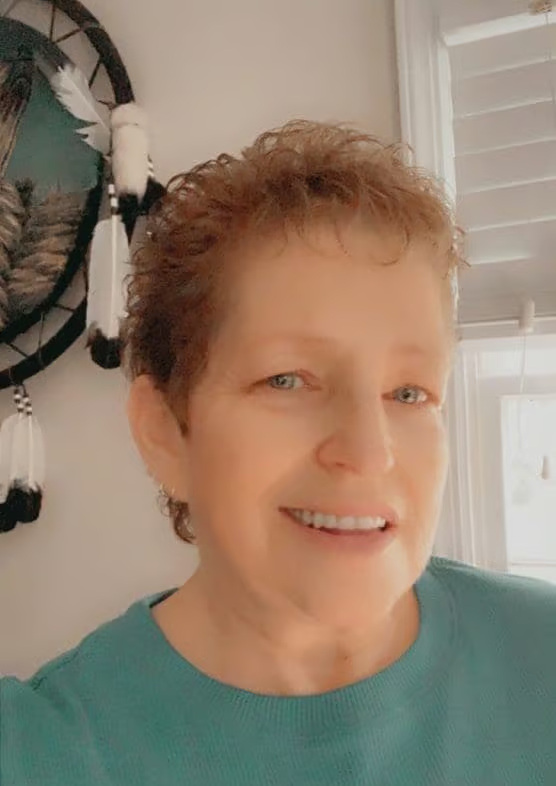
I dialed “9-1-1” late evening on June 12, 2018, for excruciating abdominal pain, for which I underwent emergency surgery resulting in a partial gastrectomy (Bill Roth II procedure) removing the lower two-thirds of my stomach. A 9.5 centimeter-sized tumor had perforated the pyloric antrum, explaining the excruciating pain I experienced. I have an extremely high pain tolerance. At the time, I was 56-years-old, a single mother, and worked full-time for decades as a paralegal. On August 10, 2018, A PET scan confirmed the surgical diagnosis that the cancer was stage four, and the initial pathology indicated adenocarcinoma/poorly differentiated (T4, N2, Mx). I tested “negative” for the H. Pylori bacteria, and I underwent genetic testing, which also returned “negative.” The tumor tested positive for biomarker HER2+ (positive). Weighing 95 pounds, I was discharged from the hospital on June 29, 2018, and instructed to recover and gain as much weight as possible before starting chemo. My prognosis was poor, to be charitable. I overheard some hospital staff pinning a “six-month” ticket on my head. On August 9, 2018, my mediport was surgically implanted; and I began my 1st-line chemo the following Monday, August 13, 2018, weighing 118 pounds (I managed to gain 23 pounds). The side effects of the first-line chemo were both debilitating and cumulative, compounding with every infusion. After the 12 cycles of chemo on January 10, 2019, I took a short break to have a CT scan on January 17, which unfortunately indicated liver metastasis (confirmed by PET Scan on January 29. All of that horrific first-line chemo was unsuccessful. On February 4, I began second-line chemo, which continued weekly until March 25. I still experienced debilitating fatigue, “cold” neuropathy, cachexia (muscle-waste), and PTSD from the first-line chemo, along with the additional side effects of the second-line chemo, which included new-additional fatigue and hair loss. I was given premeds with both lines of chemo; both lines included steroids, which caused the side effect of “insomnia.” I challenge you to imagine having extreme, overwhelming fatigue and insomnia at the same time. I found satirical humor in that.
My secondary pathology report arrived in mid-March 2019 indicating tumor biomarkers: PDL-1 (CPS score of 80%) and also MSI-H (high), either of which qualified me for immunotherapy treatment with Pembrolizumab (a/k/a Keytruda, which you may have seen advertised on television and magazines). Immunotherapy drugs have different prerequisites for each cancer type. For Gastric Cancer, the precondition for Keytruda is two prior unsuccessful lines of chemo and a PDL-1 score of one percent or higher. However, regardless of cancer type, MSI-H tumors qualified on their own with no prerequisites, which is what my oncology team used to enroll me for treatment. I began Keytruda on March 25 with infusions after that every three weeks. All subsequent CT scans evidenced a decrease of the liver metastasis until the CT Scan on November 25, 2019, which indicated “No Evidence of Disease” (a/k/a “NED”). I am still treating with Keytruda and had my 32nd infusion on January 6, 2021, and remain “NED.” Stage 4 cancer is treatable but not curable as recurrence is always possible. Keytruda is a “miracle drug” for many patients, and it has been for me. I work very hard to maintain my NED status. I fight this disease harder each day, mostly in honor of those who suffer with and have died from this cancer. There are countless daily heartbreaking stories, and this cancer has no age boundaries as there are more and more young people being diagnosed with it. I have permanent residual effects from the two lines of chemotherapy: cachexia (which I now have under control), osteoporosis, constant Level 9 pain in my left hip due to Neulasta Onpro, neuropathy for cold-sensitivity caused by Oxaliplatin; and PTSD, which is mostly under control except for awakening at 2:00 AM every day.
While chemotherapy purports to “kill” cancer cells, it also kills healthy cells, leaving patients with many adverse side effects that are cumulative with each successive treatment (many of these become permanent). Immunotherapy, however, purports to “retrain” the immune system to attack and kill the cancer cells that are “hiding” behind the particular biomarker. There are many possible severe risks associated with immunotherapy. However, it was a risk I chose to take after considerable research, and I would make the same decision if I had it to do over again. I am very fortunate my crappy cancer has correct biomarkers.
Unfortunately, Gastric Cancer is highly under-recognized and does not share the same glorious funding as cancers such as breast, lung, and pancreatic cancers. Being so grossly underfunded, the research allotted to it is minimal (noting that Japan, China, and South Korea have enormous funding and research for gastrointestinal cancers). According to the American Cancer Society, for the year 2020, there were approximately 27,600 new cases of gastric cancer, with about 11,000 deaths. The FDA-approved “standard” treatment protocols have been the same for many years and do not work for every patient like me. Immunotherapy as a third-line option was successful, but I had to endure the debilitating prior eight months of chemotherapy all to no avail. Active research aimed at early detection of gastric cancer and detecting which patients will have success from various treatments; an increased funding amount would significantly broaden ongoing and future research. My Stage 4 cancer caused me to cease my employment and go on Federal Disability (SSD). I did not drive again until the Summer of 2019 due to the ill effects of chemo. Since June of 2018, I advocate strongly for myself and other cancer patients suffering either gastric or other cancers.
In 2020, I was nominated to participate as a “consumer advocate” in the Congressionally Directed Medical Research Programs hosted by the Department of Defense’s Peer-Reviewed Cancer Research Program. Consumer advocates are comprised of patients who prepare written and verbal comments about the impact of the proposed research on diagnosis, treatment, and quality of life. It was such a high honor for me to participate among the professional, scientific/medical reviewers, to deliver a cancer patient’s input to the various, numerous proposed cancer research applications.
Additionally, I assist cancer patients in resolving insurance coverage issues, filing for State and Federal disability, financial stress, unpaid debt, and marital stress, and locating resources such as counseling, home health care, and Hospice.
My “warrior tip” to you is: “keep your mind sharp and strong at all times.”
I believe this is 95% of the battle. Always strive to be bigger than the disease even when you are beaten down by chemo, on the couch from debilitating fatigue. Somehow find it in you to do what you must: Keeping a strong mind also includes properly nourishing and hydrating yourself, even when you feel you cannot. Mental health is not readily addressed by the medical teams. During the first 9 months of chemo my eyes would shoot-open at 1:30AM every day; I’d be gasping in air thinking “Oh thank heavens, I’m still here!!!”, chemo (post-surgery) was so harsh I swore it would kill me before the cancer ever could (that is how horrid it makes you feel). I later learned that post-surgery chemo is more debilitating due to malabsorption issues. These things stay with you but you will overcome them in time. You need to understand the chemo drugs, when they “peak” and when they “fall”, knowing during the “peak” (a/k/a Nadir) you will be feeling the worst – you can most definitely plan for it! I kept a dry-erase calendar and circled these days in “green”. You need to understand that dehydration will not only earn you a trip to the ER or Infusion Center for IV Fluids, but an array of painful, and often serious, other issues. Set realistic short- and long-term goals for yourself. Get journals, puzzle books, and adult coloring books to take your mind off of your poor quality of life. There will be a day when the strings on your boxing gloves are loose, just don’ ever take the gloves off. And every morning when you rise, remember you have two (2) middle fingers – use them!! I am so thankful and grateful for: My outstanding surgeon and original oncology team (Montefiore Nyack) for saving my life, I’m certain I wouldn’t be
writing this without having had the surgery and oncological care I received from them; my Mom, son and daughter-in-law, family and friends for always supporting me, and visiting during the many months I was treating with chemo even when I was scary for them to look at or be around; Merck for perfecting Keytruda enough for MSI-H patients to attain NED status; my older granddaughter, Charlotte Rose, for inspiring me to really suck it up, find a way off the fatigue couch and start driving again shortly after her birth in July 2019; both my granddaughters, Charlotte Rose and Olivia Jean, for helping me forget about my disease and permanent ailments for at least 3⁄4 of every day; my outstanding new medical team (NYU Langone) here on Long Island for keeping me NED; and Debbie’s Dream Foundation for being a wealth of information and resources to me; accepting me as a PREP Mentor, Patient Advocate, and my newest endeavor of Chapter Leader for Long Island, New York; It is very rewarding to assist other patients and/or caregivers navigate this deadly disease, ensure they have proper credible information, and be a voice as a Patient Advocate for the Stomach Cancer Community and a Patient-Consumer Reviewer for the Peer Reviewed Cancer Research Program which receives research funding for Stomach Cancer via our Advocacy Day efforts.
Recipe Tips:
Post-gastrectomy and during chemo, I followed (and still do) a soft diet high in protein. The only milk product used was/is
half and half in my coffee. To achieve my needed weight gain prior to starting chemo, I made meals 3-5 equaling a total
1500 calories daily. You should allow at least 20 minutes for eating meals and chew very, very well before swallowing. I was
advised by my medical team that the softer the food is being swallowed, the less chance for bowel obstruction. I’ve
never had any such issues in the 4+ years post-gastrectomy.
Check out 2 of my favorite holiday recipes here.
Keeping Hydrated:
In between meals, drink, drink, drink your watery beverages (we’re told to drink at least half our weight in ounces daily!)
Poland Spring, Crystal Geyser, and other companies make small 8 oz bottles, buy a 12-pack and save the bottles to
reuse. Seeing that small amount of water makes it very easy to pop down at least 8 of them daily! Add extra “meals” in
between that to include salads or soft-steamed vegetables. You can also use tuna or salmon salad for extra meals.
Modal Title
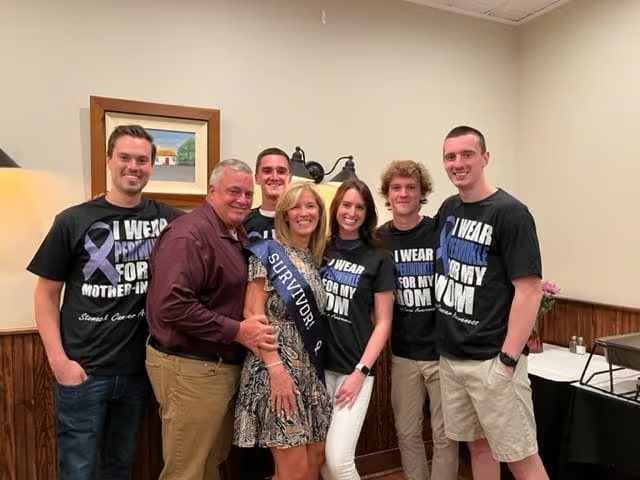
It’s February 27, 2022, and tomorrow marks five years. Five years since a part of my life ended, and another began. At this moment, five years ago, I was excited. I was looking forward to removing the offending organ (my stomach). I didn’t want it for another second because the longer it was a part of my body, the second cancer had an opportunity to take over. I had fared well with chemo. Hair loss and fatigue were my only complaints. I would joke, “if I didn’t know I had cancer, I wouldn’t know I had cancer.” But as we all know, stomach cancer is the renowned “silent killer.”
But little did I know of the second part of the surgery-the recovery. I had no idea I would start the most challenging phase of my 47 years. The pain was excruciating. The worst I’ve ever experienced. And no one would promise me it would get better. There were many times I thought I was dying. There were many times I wanted to die because the thought of living with that pain for the rest of my life was unbearable. My elderly mother, six siblings, husband, and five children all had a front-row seat to my vulnerability and helplessness.
But five years later, I’m here. The pain did get better. “I had stomach cancer and now HAVE no stomach” became less and less a constant thought in my head.
In the last five years, I’ve watched two children graduate college, two graduate high school, and two get engaged. I danced with my son at his wedding last august. I’ve helped plan my daughter’s wedding in May 2022.
My husband and I traveled to Alaska and Hawaii, celebrated 30 years of marriage, and rediscovered how much we like each other.
A lot can happen in 5 years. I’m just so grateful to God for allowing me the chance. Stay strong and fight on.
Modal Title
Our journey began when my husband Brett was an Addiction Counselor, and he decided to try a new path working with incarcerated youth. He became a guard in a juvenile facility. One night, while coming home from work, he decided to eat an apple, but the apple did not stay down. That was the beginning of his journey of being unable to keep food down. I said, “Off to the doctors you go!”
The doctors ordered a tube into his esophagus, and this very rude surgeon came out after the procedure, said it was cancer, and walked away from us. Since I am personally used to doctors being rude and off-putting, I decided to do something about it. A year before this all happened, I had a cancer scare (it ended up being nothing) and I was fortunate to encounter a most caring oncologist. Before leaving the hospital, I ensured that Brett was set up with that same oncologist. I had the oncologist order scans to be ready at Brett’s next appointment. Before the appointment, I researched every specialist I could think of and had a printout in a book to take with me to the oncologist appointment. At the first appointment in an exam room, as soon as the nice woman said, ” How are you doing?” I fell apart crying. After she left the room, Brett said, “You know I am not good at this talking stuff, and you are my voice, so dry your tears. You are my voice, so do the talking and get something done for me.”
So that is what I did.
When the oncologist and cancer resource advocate came in the room, I opened up my book and said, “I do not want something started next week or next month. By the time we leave today, I want a plan and specialist in place. I want every medication ordered that will help with the side effects from chemo so that I don’t have to run out and get them when he starts getting sick.”
And that’s what the oncologist did. I went to another esophagus specialist because I was not too fond of the first one. The specialist suggested a gastric surgeon because he saw something at the end of Brett’s esophagus. That gastric surgeon said there wasn’t anything we could do, and he sent us home to “get our affairs in order.” We were 60 miles from home. I cried the first 30 mins and then cussed the rest of the way. I told Brett to go straight to the oncologist. No appointment, but he was going to see us anyway. I wanted the doctor to get a plan going and quickly. So by the following week, we had Brett on 5fu. But no luck with that treatment. It could be because he had two lousy chemo ports, and the chemo, instead of going through his veins, went through his body. Then we tried Taxol and radiation. Brett had a bad reaction to the second dose of Taxol and got switched to Taxotere after that. After 30 days of radiation and four rounds of Taxotere, the tumor began to shrink. I said to the oncologist, “It’s time to find a surgeon.” The doctor agreed that chemo was no longer needed to treat Brett’s cancer. However, I was skeptical, thinking, “Yeah, right.” We found a surgeon who did the surgery and then six more rounds of chemo.
Since then, Brett has been cancer-free for three and half years!

Modal Title
I began feeling strange in Nov 2019. I started having random panic attacks and feeling generally uneasy and very down, which was entirely out of character for me. After struggling for a few more weeks, I went to see my general practitioner. My doctor listened as I explained my symptoms and gave me some anti-depressants. The tablets seemed to stop the panic attacks and calm my anxiety, but they never thoroughly disappeared, and I couldn’t shake the feeling that something was wrong. A couple of months passed, and I started to get some sharp pain when swallowing. I was also struggling to swallow, and this lead to me being sick when I ate. I presumed this was a stomach ulcer, so I went back to my doctor, and they gave me some stomach acid suppressants to clear up a possible ulcer. The course was 28 days, and once this time had passed and the pain had worsened, I went back to get a higher dose. Again 28 more days went by, and things were not improving at all. The next time I went in to see my doctor, they referred me for an endoscopy as things were getting worse. I went for my endoscopy on August 11, 2020, and they discovered a heavily ulcerated area of my stomach and an 8-centimeter tumor. Biopsies were taken, and I stayed in the hospital overnight. The next day following a CT scan, I was diagnosed with stage 4 gastric cancer and told to expect ‘months to one year to live.’
I began Palliative EOX chemotherapy at the end of August 2020, and I had such a bad reaction to the first cycle that I decided to stop. I thought that if I only had a short amount of time left to live, I would rather spend my time doing things I enjoy.
My condition deteriorated over the next few months, and I was in lots of pain. I began to struggle to lie down due to intense back pain and the sickness when eating returned.
Despite making significant dietary changes, searching for alternative treatments, and trying immunotherapy (that didn’t work for me), I reluctantly decided to go back on chemotherapy out of desperation. I had a new oncologist at St. James Hospital Leeds, and they removed Epirubicin from my chemo regime and just gave me 80% strength Oxaliplatin and Capecitabine.
I had a fantastic response to this chemo, and my scan after three cycles showed a two-third reduction at all the sites (stomach, liver, and abdominal nodes). I was made up and proceeded to finish my remaining three cycles before being told I could take a break from the treatment and go on ‘watch and wait.’ I didn’t enjoy waiting as I wanted to carry on treatment and beat this cancer.
In June 2021, I went to London and privately paid for a Nano Knife procedure on my liver. The process would get rid of what was left of the tumors there and clear my liver. The procedure was performed in early June 2021 and was successful. I then went back on chemotherapy for three more cycles of 80% OxCap and my latest scan has shown pretty much a complete response to the treatment!
I have decided to stay on Capecitabine tablets alone for three more cycles to clear anything that might have been missed and hopefully prevent any reoccurrence. After the subsequent three cycles, I will have a scan to check, and if I’m still in complete remission, I can choose to end treatment if I wish.
Due to how severe my diagnosis was, they will probably never tell me I’m ‘cured’ or cancer-free, but as long as my scans stay clear and don’t show anything growing, that’s all that counts! I’m now looking to get my life back to some normality after a whirlwind of a year. I look forward to living each day with gratitude and to its fullest.
Modal Title
I am 55 years old and the mother of five children. Two of which have been given back to God, as we say in my family—one at birth and the other one, Chelsea, on June 11, 2021, from this brutal disease, linitis plastica or leather bottle stomach, a rare form of stomach cancer, at the age of 31.
Ironically Chelsea is not the first person in my family to lose their life from stomach cancer. An aunt and also a cousin have also suffered the same fate. Yet Chelsea’s CDH1 and CTNNA1 were both negative. Coming from a medical background (I’m a hospice doula, her dad is a GI doctor, and stepdad is also a doctor), we are all very suspicious that there had to be more to it, and there may be another genetic link yet to be discovered. As a result, my blood and her dad’s blood are stored with Chelsea’s for future testing. It’s important as Chelsea was fortunate enough to harvest 22 eggs on New Years Day, 10 of which are now embryos, and I have no doubt someone will be born out of that bunch.
As a family, we have a very vested interest in the genetic findings of this disease. We are also curious about the treatments that are working and the surgeons who are cutting edge. Sadly, for Chelsea, nothing worked. Her cancer continued to grow despite the absolute best of treatment. Since her dad is a GI doctor, I am confident he did the research needed. Chelsea felt incredibly supported upon diagnosis on December 16, 2020, when she was told that the sample from her advanced endoscopy came back positive for cancer. On December 21 she had a laparoscopy and on December 24, 2020, she had a PET scan/CAT. With her doctor’s permission, that same day she also began fertility treatments to harvest her eggs. Chelsea couldn’t drink or swallow anything at the time. On December 29, 2020, the surgeon called her to inform her with the words “STAGE 4.” That call literally took every ounce of hope and every bit of support she felt and blew it completely out of her. It was as if she was then written off.
I understand how challenging it was for the medical staff to get her treatments approved despite the stage 4 diagnosis. Still, the presentation and lack of conversation about the truth of her disease were horrible. Her husband attended all of her appointments, letting us join by phone due to COVID, and the lack of compassion and literal truth said to them were stunning. I feel like this desperately needs to change. I know that the fear of death for most stage 4 patients is very real, yet it is not ever discussed.
As a hospice doula, I find that, amazingly, death is such a dirty word, yet we are all going to die. I hardly thought it was a secret. Chelsea and I have been hospice volunteers and doulas for well over ten years, and we always had a “plan” if “one of us” got sick. Of course, the “one of us” was me, not her. Yet here we were. She was bestowing me with the honor of being her doula. A gift I can only tell you fills my heart more than anything else. It is also something I’d like to offer and share with others who would like to know more about it and have questions about palliative care versus hospice care and what it is we do. I am sure many people are success stories in the DDF community, but for those that aren’t, they are the ones I’d like to offer my support to.
Modal Title
Theresa Germano was diagnosed in February of 2018 with Stage 4 GE junction cancer (esophagus and stomach intersection) that had spread to her liver. This news led her daughter Adriana and son-in-law Tony to sell their home within 30 days and move in with Theresa as official caregivers. Just nine years prior, Adriana’s father died from stomach cancer within six short weeks of his diagnosis, so taking care of her mother was a top priority for her and her husband.
Initially, Theresa was hospitalized for two weeks because she was underweight and malnourished from limited swallowing due to the blockage. Due to her insurance, she had to wait for forty days post-diagnosis to start her first chemo treatment for esophageal cancer at MD Anderson Cancer Center at Cooper in Camden, NJ. Theresa continued with thirteen more rounds of chemo, followed by twenty-two of the prescribed twenty-five treatments of radiation. Though she didn’t undergo surgery, she received a G-tube to help deliver 90% of her nutrition with Nutren, a high protein shake, three times a day.
Theresa’s cancer responded very well to the treatment. After just four rounds of chemo, her GE tumor shrunk to half its size. She continued to do well regarding efforts to eliminate the cancer, despite the brutal physical and emotional debilitations that often come with treatments. She continued with immunotherapy (Herceptin) every three weeks, which seemed to help keep the cancer at bay.
In July of 2019, a CT scan revealed that the tumor had returned. As a result, Theresa’s regimen changed from Herceptin to Keytruda every three weeks, and again, she was able to eradicate the cancer rather quickly.
Adriana and Tony decided to move into an apartment down the street from Theresa in October 2019. Since then, Theresa has been undetectable for over a year, and she continues treatment with Keytruda, with little to no side effects. Her family remains hopeful and grateful that everything is going well for Theresa and they pray for her continued strength.Stories From Our Community
It started with pain—deep, persistent pain in my pelvic area…
Modal Title
It started with pain—deep, persistent pain in my pelvic area that I couldn’t ignore. I went to several doctors starting in 2004 searching for answers, and I was usually dismissed. Some doctors told me it was just “bursitis”. A few others told me I “couldn’t handle period pain”. In 2009, I finally found a doctor who listened. By then, I was not only in pain, but I was chronically fatigued and had terrible reflux. A routine lab test revealed low B12, iron, and folate. That result triggered a whirlwind of appointments. I was referred to GI, where my symptoms (GERD and low labs) were initially chalked up to stress and “being a woman”. But because of my family history of colon cancer, they ordered an upper GI in April. That’s when they spotted a mass—dismissed as benign—but sent me for an endoscopy in May. It confirmed the mass and revealed a hiatal hernia, which may have explained my GERD symptoms.
I was still in pain and frustrated, but the endoscopic ultrasound wasn’t scheduled until July because the mass was assumed to be non-urgent. Because my GI doctor stressed so much that this mass looked benign, I was not worried about the results of the EUS. I wanted answers for my pain in my pelvis. So when my doctor’s office called on July 27, 2009, I figured I would just be told the mass was benign, and I didn’t want to hear it since nobody was helping me with my actual pain. Also, I was at work, so I ignored the calls—until I finally picked up after the 5th call.
That’s when I learned the truth: the mass wasn’t benign. It was cancer. My pathology report read: Stomach Polyp: Adenocarcinoma, poorly differentiated, with signet ring cell features, associated with high grade dysplasia. I was shocked. I was only 26!
One month after my diagnosis, I underwent a partial gastrectomy. My staging was finalized as T1a—an incredibly lucky catch. But my recovery was difficult. I developed motility issues in my esophagus that made swallowing almost impossible and led to a 20-pound weight loss. After having my esophagus stretched, I struggled with chronic reflux and frequent bronchitis from aspirating stomach acid.
Despite the setbacks, I had triumphs. The reason for my pain was finally identified, and I had successful surgery in 2011, which alleviated this pain. I earned my Master’s degree in Higher Education Administration in 2012, and in 2014, I gave birth to my son. Then, in 2019, after years of complications, I had the rest of my stomach removed to alleviate the reflux and aspiration caused by the partial gastrectomy. I live a much more comfortable life now!
Being in pain saved my life! I wouldn’t have gone to the doctor. I wouldn’t have had the tests. And given the pathology, I wouldn’t be here today.
I was one of the lucky ones. Stomach cancer is often diagnosed too late—but mine was caught early, by accident. My incidental diagnosis has led me to be a passionate advocate for better early detection practices. Through my work with Debbie’s Dream Foundation, I’ve found a way to make sense of my survivorship. Giving back isn’t just healing—it’s my purpose.
Modal Title
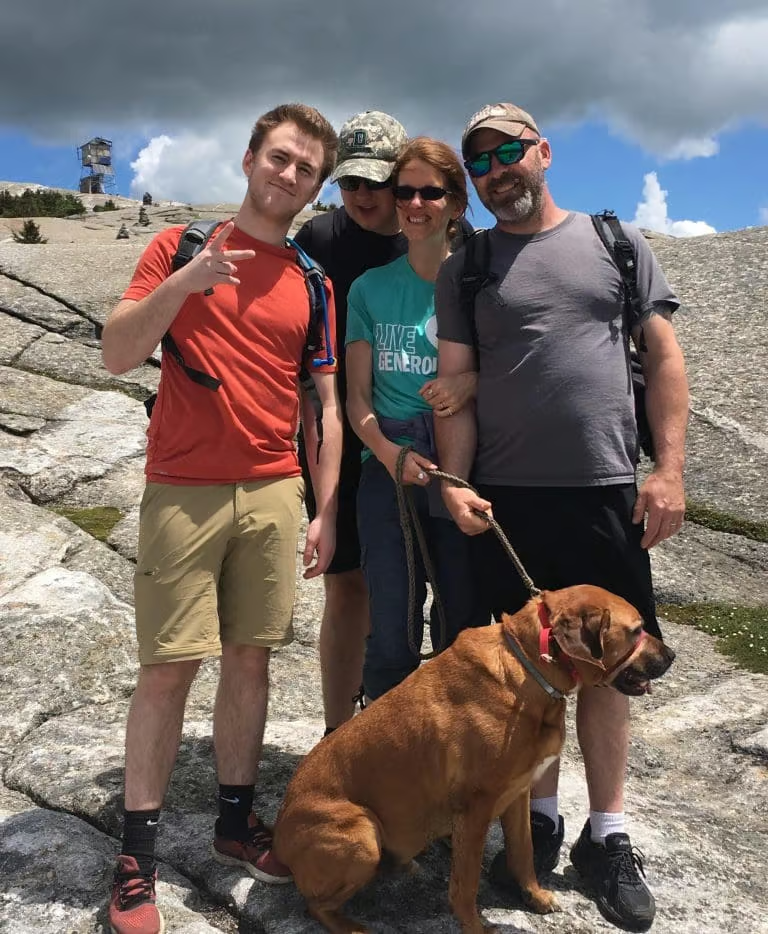
My name is Lisa Gardner. I am a 46-year-old wife, mother, and special education para-educator. February 28, 2018, I was diagnosed with stage 4 stomach cancer. The 10 cm tumor was growing in my upper stomach and into my esophagus. The cancer had spread to 4 major lymph nodes around my aorta, making my case inoperable. Doctors had very low expectations, giving me a year maybe two to live, and they clearly stated that stage 4 stomach cancer patients do not live longer than five years once diagnosed. A little over a year later with lots of prayers, dietary changes, chemotherapy, cryotherapy, and immunotherapy, my last PET scan on March 27, 2019, showed no sign of disease!
My first thought for treatment was surgery. Any chance of recovery, which I had researched, was a result of total stomach removal. I was unable to do so because the cancer had already gone outside of my stomach and into my lymph nodes around my aorta, but I believe God had a new recovery plan for me to heal. I prayed nonstop and asked friends, family, coworkers, and local churches to also pray for my healing.
I immediately made dietary changes to try to heal my body. I cut out sugar and acid-causing foods, added carrot juice, made lots of healthy smoothies, and ate only small amounts of fish and chicken. I also incorporated other cancer-fighting foods, dietary herbs, and supplements. This really helped to relieve my pain right away. I had no more acid reflux, and my level of discomfort was to a minimum. I eventually decided to eat only a plant-based diet without refined sugar. Nutrition was a very important part of the healing process.
Medically, I was put on chemotherapy after being declined for immunotherapy because it was considered a second-line treatment in the medical insurance world. The cancer stabilized for a bit, but my health began to deteriorate due to my inability to eat and immune suppression. After five months, the chemotherapy stopped working, and the cancer came back more than 75 percent. I now weighed 101 pounds, could barely eat due to the blockage and was fading fast. Thank God my doctor called my insurance company and had my immunotherapy, Ketruda, approved in September 2018.
At the same time, my doctor continued to proceed to refer me to the Gastro department to have a stent put in to allow food to make its way through my esophagus and into my stomach. Luckily for me, instead of the stent, Gastro had a new treatment to freeze tumors out of the esophagus and stomach area through cryotherapy. It made a world of difference. I could then eat with little trouble. My health was now improving every day, and I gained back 25 pounds. I was even able to start exercising to improve my health as well. Finally, after a little over a year, my last PET scan on May 27, 2019, revealed no evidence of cancer! I thank God for each day and pray that others with cancer continue to heal. May my story give you the hope to carry through.
Modal Title
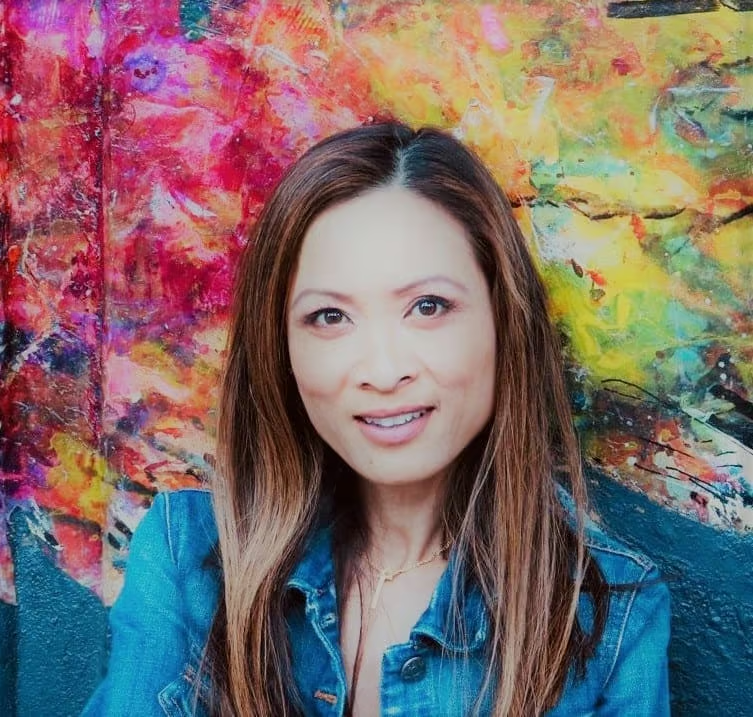
Victoria “Vatsany” Soudaros is an immigrant from Laos. She loves to travel, eat, shop, and is a chef at heart. She is half Laotian and Thai. In 1979, Victoria’s family was sponsored for asylum as political refugees from Laos to the U.S. by a Lutheran Church. Victoria has loved fashion and food since the age of 5. She developed this love of food from her mother and sisters. Although her single mother struggled to raise her three daughters below the age of 8 upon arrival to America, she provided comfort to them in the cooking of Southeast Asia. After graduating from high school, Victoria moved to Orange County, California, to pursue her dream of working in the fashion industry. Although accepted to the University of California Irvine, she chose to attend The Fashion Institute of Design & Merchandising. In 1999, Victoria graduated with an Associate of Arts in Merchandise Marketing and achieved her dream of working in fashion. Over the following 15 years, she was employed by several iconic brands such as Levi’s, Cole Haan, Movado, and Calvin Klein, working her way up the corporate ladder. Her passion and work ethic led to many different roles, including the trainer, sales representative, recruiter, and visual merchandise manager.
Many call Victoria a cancer warrior. She was diagnosed with stage 3 gastric cancer in 2015. With the grace of God and a team of talented doctors, Victoria tackled this dreadful disease in 2016. In the face of this adversity, she found the inspiration to create a food blog with recipes tailored explicitly for chemotherapy patients. She also was inspired to complete her formal education and earned a Bachelor of Arts degree in Organizational Management from Point Loma Nazarene University. For the first time in her life, she did not know what challenge was next. God apparently chose one for her because the disease returned full force in late 2017. The following year was filled with many visits to the ER, three surgeries, and eight more chemotherapy treatments (following the two previous surgeries and 12 chemotherapy sessions in 2015-16).
Gastric cancer has struck Victoria twice, but that’s not stopping her from fighting or living. Her cancer story has yet to end. She currently is receiving targeted immunotherapy treatment out of Los Angeles, California. Victoria is participating in a clinical trial for her specific type of gastric cancer. From this series of recurrences, Victoria found her purpose. She decided to retire from fashion to give back and become a Patient Speaker Advocate. Victoria’s mission and goals are to inspire others by sharing her story and providing support. This disease taught Victoria that our minds are more powerful than we know, that the power of positivity goes a long way, and that one must have faith and strength to heal. Victoria intends to connect with and support as many cancer and ostomy patients as possible. For Victoria, it is not only about seeking a cure but about living in the present with positivity while helping those in need. Victoria was referred to Debbie’s Dream Foundation by her doctor and joined DDF as a PREP Mentor in April of 2019. If you would like to follow her journey, she can be found on Instagram and Youtube @VCrushesCancer.
Modal Title
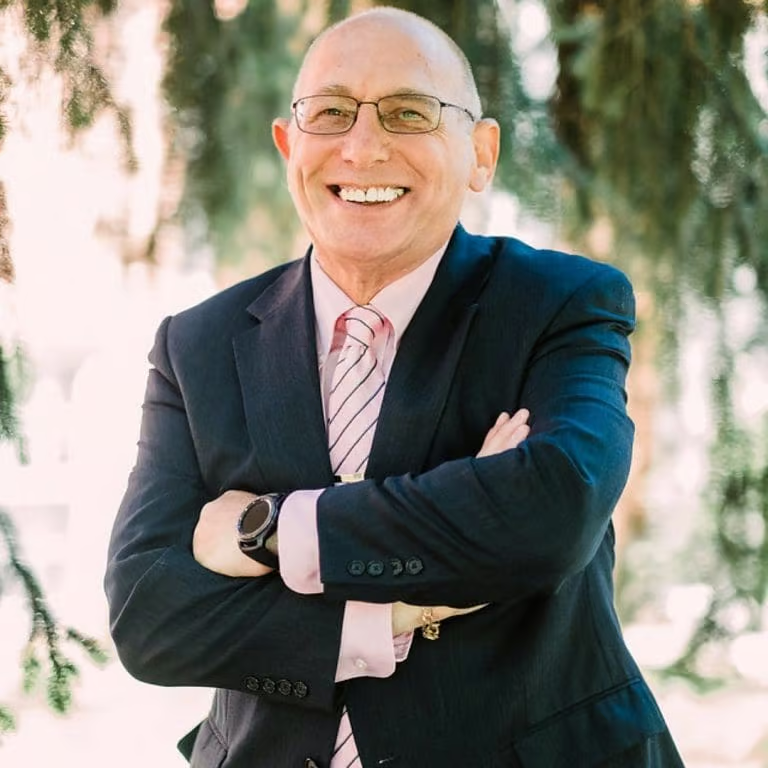
I was having stomach pains for a while, and in 2015 I went to an oncologist who just monitored my bloodwork. I asked him a few times to please do an endoscopy to look into my stomach, but he refused. As I had more bloodwork done, my chromogranin, a tumor marker, kept rising. A normal chromogranin reading is 90 and below. Mine was going up, and the pain was getting worse. I later learned that my doctor had written, “Alan was not made aware that he has stomach cancer,” in his notes. At that point, I switched to another doctor who referred me to another oncologist. I had more bloodwork done and learned that my tumor marker was fluctuating between 777 to nearly 800. I was getting bloodwork done every three months, and in February 2017, I had a partial gastrectomy. My sample biopsy was sent to the pathologist a few times since the doctors wanted to make sure that it was the proper diagnosis.
On April 17, 2017, I was given the diagnosis that crushed my world—stage 2-3 stomach cancer. I had never smoked, and I was devastated not knowing if I would survive what was ahead of me.
In May of 2017, I was started on a chemo medication called Gleevec, taking 400mg or one pill a day for three months. It was called the miracle drug since it was said to have had excellent results. At the end of the three months, I went for a CT scan, and the medicine had not worked. The tumor was the same size and had not shrunk. The oncologist sent me to a surgeon whom I knew from the hospital where I had worked. I was told that I would need surgery to remove the cancer.
On Sept 15, 2017, I had 90% of my stomach removed in a five-hour operation, and I was in the hospital for six days after the surgery. I was told that the cancer was becoming aggressive and if I had not had the surgery, I would have died three months later. I was forced to retire in March 2018 due to the pain, fatigue, and nausea I was having every day and still have.
I have been fighting for disability since March of 2018. When I told my daughter, 13, about my diagnosis, she was crushed as expected. My ex-wife and her family have been very supportive and helpful since I live alone. I am scared that the cancer could come back. I often travel to give motivational speeches to provide hope and inspiration to people going through cancer and other diseases. Cancer is not something I ever imagined I would have. In spite of all the surgeries and other medical issues I’ve had, I am a fighter and will continue to fight. My hope is that stomach cancer will eventually be cured. I recently lost a good friend to stomach cancer, and I don’t want to lose anyone else from cancer. I lost my mom from pancreatic cancer at age 52 in 1982. Enough is enough.
Modal Title
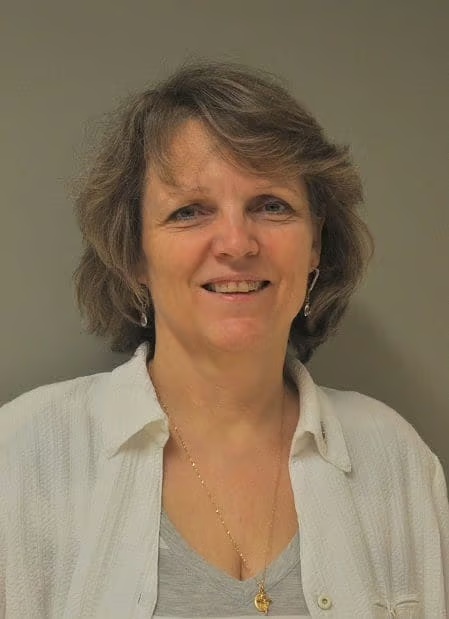
My name is Millie McConnell, and I am a twelve year stomach cancer survivor.
I was diagnosed Nov 15, 2001 with Stage 3B Signet Ring Stomach Cancer and told to put my affairs in order. The hospital had me on morphine although it was on my record prior to surgery that I was very allergic to it. Following surgery I awoke vomiting most of the blood out of my body. This led to a blood transfusion to replace all the blood. (I’m looking into this to see if it could be the reason why I’ve survived and am so rare a survivor!!!)
My type of cancer at that time was labeled “juvenile and aggressive.” The doctors explained that they had no idea how to even TREAT it, so they put me on the second highest levels of chemo and radiation treatments together.
Once the initial SHOCK hit, I slowly came to realize that it was all now out of my hands. At this point I decided to LET GO and just follow the advice from doctors, oncologists, family, friends, and others and just LIVE as best I could with joy for each day of life left.
What followed was a very aggressive treatment of chemotherapy and radiation, and through the entire experience I remained calm and even cracked jokes with my family, fellow patients, and the medical community treating me. This attitude seemed to ease the experience because I was not hanging on to the negative emotions that often accompany this experience.
It’s been a long journey. Five years following treatments I forced myself back to work (against my doctor’s orders) as an Admission Representative at a local business college. After about 1.5 years, my system completely crashed and doctors told me I was done. I explained to these doctors, “Never say you are DONE to a cancer survivor! I’m DONE in this career but starting another.”
Following this I joined Toastmasters International and began learning how to be an effective public speaker. This has led me to so many more experiences and one is with another organization, Debbie’s Dream Foundation: Curing Stomach Cancer. This amazing group of people, (especially Debbie who is my inspiration) flew me to Washington DC to visit the legislators’ offices on Capitol Hill. I joined thirty people who came from across the United States to advocate that funding for stomach cancer research be reprioritized by NCI (National Cancer Institute).
Meeting other survivors was inspiring and being the longest survivor there, I tried to help with questions and sharing of information to help everyone learn as much as possible about this deadly disease.
Now I may be asked to go on a local news station in another province to tell my story, and I’m hoping to begin a Canadian chapter for us all to GLOBALLY unite and learn together! My dream? TO ELIMINATE STOMACH CANCER BY RAISING IT TO THE TOP FOR MORE FUNDING FOR RESEARCH AND GRANTS.
Thank you for letting me tell my story. I have a book almost completed in hopes of also inspiring others about to travel on this journey into fear and the unknown.
Believe in miracles. I am living proof that they DO happen!
Modal Title
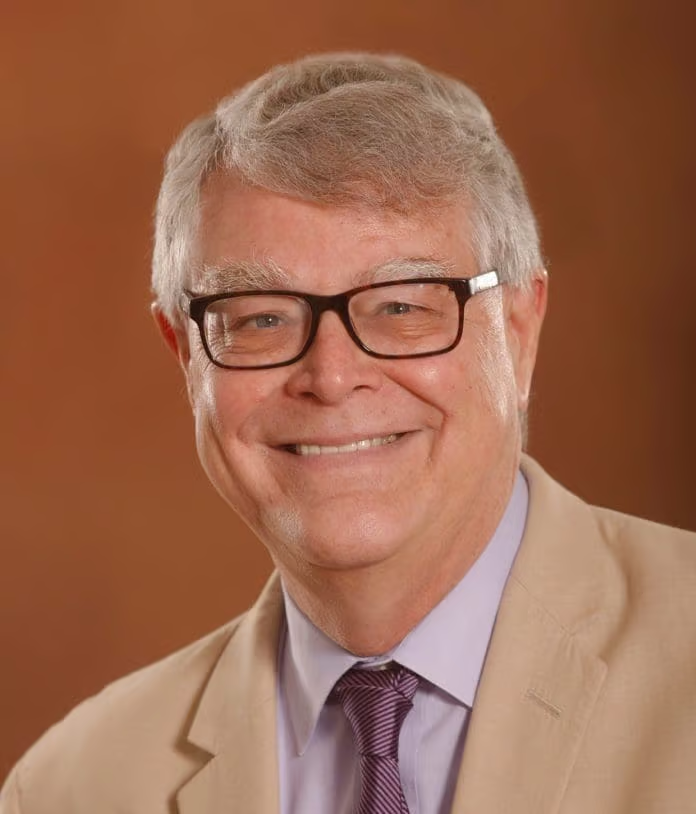
I never really had any symptoms of stomach cancer. In 2010, I was a Professor at Michigan State University and was Provost for Health, responsible for the Medical and Nursing Colleges. I thought that I was in great health. I was at the Michigan State University Student Health Service Halloween Party in 2010, probably wearing some kind of silly mask. I got a little out of breath climbing one flight of stairs and went to see my primary care doctor. It turned out that my hemoglobin was 7.0, when it should have been 14.5-16.5. Somehow I had lost half of my blood without even noticing. I had never had any other symptoms. Maybe I had some low grade nausea once in a while, but doesn’t everybody?
I had a colonoscopy and an esophagogastroduodenoscopy (EGD) soon afterwards. When I woke up, the surgeon who had scoped me showed me a picture of a very nasty looking ulcer in my stomach. My colon, however, looked good, which made me happy because I thought that I probably had colon cancer. That night I went to bed thinking something like “good, all it was just an ulcer,” but I did not feel quite as happy as I thought I should. As I was drifting off to sleep, I had a vision of a huge Day-Glo crab skittering across the ceiling of my bedroom; it is the closest thing to a hallucination that I have ever had.
The next afternoon, I called my surgeon’s office to see if the results of my stomach biopsies were back yet. Unfortunately, my surgeon was out of town that day; so, I went into the electronic medical record system and looked up my own chart. (Since I am a physician in the same practice with my surgeon, I had access, although the practice guidelines discourage looking up one’s own medical record.) The pathology report read “moderately differentiated intestinal type adenocarcinoma of the pyloric region of the stomach.” My first thought was, “I’m dead.” When I told my wife about my diagnosis, she asked “Are we going to be OK?” I answered “No.” As a physician, I was all too familiar with the frightening prognosis of stomach cancer. I got lots of imaging (both CT and PET), and none of it showed evidence of spread outside of the stomach. These findings made me feel a little more optimistic, since the prognoses are so much better for early disease than late disease.
In a couple more weeks, I had stomach surgery. Before anesthesia, I signed papers saying more or less “take whatever you want and do whatever you want with it.” I did not know what organs I would wake up without. It turned out that I lost most of my stomach (which had no microscopic evidence of cancer at the margin of the part removed, which was a good sign). I also lost my gallbladder, a biopsy specimen from my liver, about 30 lymph nodes and a lot of my peritoneum (the membrane surrounding the abdominal organs).
I was in the hospital for about a week, getting lots of opiates, which left me largely amnestic for the whole hospitalization, which is probably just as well.
On the day of my discharge, my cancer surgeon shared the pathology report with me. The report was T4N3M1, which is Stage 4 disease. T4 means that the tumor had gone all the way through the wall of the stomach; N3 means that I had over 7 lymph nodes (I actually had 20) with evidence of cancer and M1, meaning that I had a metastasis, in my case to my peritoneum. My wife says that I cried when I got the results. I do not really remember that, but I was devastated.
I met my medical oncologist the next month. My primary care physician came to the appointment with me, and both of them spent over an hour answering all of my obsessive questions, for which I will be forever grateful to them. Being a physician and an obsessive, I had read everything that I could find about metastatic stomach cancer, and the prognosis looked so bad that I considered not having chemotherapy and just waiting to die. Being a psychiatrist, I realized that I was sort of out of my mind. Fortunately for me, my tumor over-expressed the HER-2 protein, and Herceptin (trastuzumab) had been approved for stomach cancer just weeks before I was diagnosed. It had been approved for breast cancer with the HER-2 protein 13 years before. About 20% of breast cancers and 20% of stomach cancers are of this type.
I received infusions of Herceptin and oxaliplatin (Eloxatin) infusions every three weeks for seven cycles. Then I received total abdominal radiation for 25 days. During this time, I had lots of stomach cramping, nausea and diarrhea. My oncologist prescribed everything for the nausea: Zofran (ondansetron), Compazine (prochlorperazine), dexamethasone, Emend (aprepitant), lorazepam (Xanax), and even dronabinol (Marinol), which is pure delta-9-THC in sesame oil. All that, particularly the Zofran, helped. The dronabinol left me completely unable to function, though, at the dose it took to decrease my nausea. Also, I was vomiting up a lot of the pills. I got a medical marijuana card and a couple of puffs made me non-nauseated and non-catatonic; so I was in the bizarre condition of smoking dope in order not to be stoned! I was able to stop using it shortly after finishing the radiation.
In addition to the radiation and infusions, I took six Xeloda (capecitabine) tablets 5 days a week. I continued the Xeloda for two years. I am still getting Herceptin infusions every three weeks. I am now five and a half years out from my diagnosis and have no evidence of disease. I am tired a lot of the time and have diarrhea most of the time and nausea occasionally. I have an unpleasant tingling in my palms and soles (dysesthesia) and feel sort of chemobrained (cannot remember stuff). All that seems like a small price to pay, though, for my survival so far. Herceptin helps most people with the HER-2 protein, but I am totally lucky to have had an “exceptional response.”
I have signed up for the National Cancer Institute’s “Exceptional Responders Study,” and the NCI has samples of my tumor to help them figure out why my response has been so good and how to make other people have what are now exceptional responses. I returned to work after being on disability for 9 months and was informed within 10 minutes that my administrative job had been abolished. Again, I was fortunate, in that I am a tenured professor. Since returning to work, I have made cancer my main professional focus.
Like most stomach cancers, except those at the very top of the stomach (the “cardia” region), my stomach cancer was caused by infection with the bacteria, Helicobacter pylori (H. pylori). It is usually acquired in childhood and persists for life. Most people never get symptoms from their infections, but about half get dyspepsia (chronic upset stomach). About 20% get peptic ulcers and about 2% get stomach cancer. The reason that only a minority of infected people get stomach cancer has something to do with their genes, the genes of their specific strain of H. pylori, and perhaps, dietary factors like, eating too few fruits and vegetables. Smoking and drinking alcohol make the disease more likely, too. I had an aunt who died of stomach cancer. My brother was infected with H. pylori but had it eradicated with antibiotics 20 years ago and did not get stomach cancer. (Unfortunately, we are not identical twins. If we were, this would be a better scientific study.)
My main “causes” now are:
1) Educating doctors and patients about helicobacter and stomach cancer. Although stomach cancer is one of the three leading causes of cancer deaths worldwide, it is relatively uncommon in the US, so doctors here do not think about it. Helicobacter was not discovered until 1984, so doctors my age tend to be only vaguely aware of it, mostly in relation to peptic ulcers. I am Founder of the Eastern Michigan Chapter of DDF and a Mentor with the DDF PREP Program, too.
2) Working for “oral chemotherapy parity.” Currently patients in many states must pay a lot more out of pocket for oral chemo drugs that they do for infused drugs. This keeps many people from getting the most safe and effective treatments.
3) Expanding access to medical marijuana (Ohio just became the 26th state to legalize it.)
4) Making drugs available sooner for patients with relatively rare diseases. Why did it take 13 years from the time that Herceptin was approved for breast cancer before it was approved for stomach cancer?
5) Getting more funding for stomach cancer research.
For all of these causes (except) medical marijuana, Debbie’s Dream Foundation: Curing Stomach Cancer has allowed me to be more effective. DDF has made it possible for me to work with the Food and Drug Administration (FDA), with the Oral Chemotherapy Coalition, the National Comprehensive Cancer Center Network (NCCN), and with the DDF Congressional education efforts.
DDF has also given me a community of people who have been a great source of comfort to me during my darkest days. Another source of comfort has been the Facebook group “Stomach Cancer Warriors and Caregiver Family,” which now has over 3000 members from all over the world.
I have a more or less monthly blog for the American Society for Clinical Oncology (ASCO) where I get to share some of what I have learned from my illness so far. You can visit my posts at this link. https://connection.asco.org/authors/James%20Randolph%20Hillard,%20MD
“Dreaming Big” with DDF has made me feel that I can fight back against this disease and also help others who are fighting it.
Modal Title
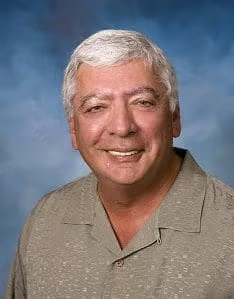
On September 20, 2012, my life changed but not for a good reason. That day I was diagnosed with gastric cancer and specifically a tumor in the upper part of the stomach near the esophagus.
I have been in the health insurance field for 30 years and was acutely aware of the seriousness of my situation and did what I’m sure many in my situation have done before; I freaked out. With the help of my wife and GI doctor, I pulled myself together and began the journey through what at times was a medical maze of doctors, tests, and more tests.
I underwent a sub-total gastrectomy with the pathology showing cancer in 3 of 27 lymph nodes. Just 3 out of 27 I thought would be better than 5 or 10 but even 1 puts most patients, as it did me, on the path to chemotherapy. Before I settled on who, what and where I would have this treatment I sought 3 oncologist opinions. Each had a different chemo cocktail recommendation which did not help my decision process but all agreed I needed to do something soon. I scheduled additional consultations with oncologists at MD Anderson, Mayo Clinic, and Moffitt Cancer Center.
I visited Moffitt in Tampa, Florida first and met with an oncologist that I would liken to a modern day Napoleon Bonaparte: a bit low to the ground in height but full of energy and confidence especially about his treatment protocol for my situation. He said you will have chemo 24/7 with weekends off over the next 30 days and daily radiation treatments at the same time. He claimed a 35% cure rate and then said, “Let me know what you want to do.” How could I not go with this guy?
It is now April 2014. The treatments have left me 60 pounds lighter, and with friends saying I never looked so good, I can’t help but wonder what a roly-poly I must have looked like before. But the very good news is I’ve had pet scans every six months and just two weeks ago an endoscopy, and there are no signs of recurrence or metastasis.
I’ve met some great people during my journey and especially those associated with Debbie’ s Dream Foundation: Curing Stomach Cancer (DDF). Gae Rogers was my DDF Prep Mentor who helped me during my surgery and chemo recovery by sharing her similar story with me and assuring me the strange feelings I was having from time to time were what she went through. By chance I was at my oncologist’s office, and who should be in the next chair, but Debbie Zelman, President, and Founder of Debbie’s Dream Foundation. Game over! I was recruited on the spot, and today I serve as a Prep Mentor. You can’t say no to Debbie.
I know there will not be an escape from my diagnosis, and every time I’m due for a pet scan there will be some anxiety to deal with. My journey has brought me closer to knowing what’s important in life, and I now happily go forward helping others where I can, and I slow down to smell the roses.
Modal Title
Like most woman today, I always put my health concerns last. So in January of 2009 when I noticed some pressure under my breastbone, I ignored it. I thought that I am too young for anything to be seriously wrong. I was only 49. I had a stressful job, I sold technology to businesses and with the recession in full swing, I wrote it off as stress. I already had IBS so it had to be that or maybe an ulcer. My husband owned his own business at the time and things were slow. Between his business and my job ….my bet was on the ulcer. Besides, my then 21-year-old son needed to have sinus surgery before I even thought of doing anything for myself so if the sensations continued then I resigned myself to go for a checkup.
In May, I was starting to have some nausea and I wasn’t eating that well. I had lost almost 30 lbs which was actually a nice surprise but I thought a trip to my family doctor was in order. My doctor asked me why it took me so long to come and see him. I answered that I really wanted to wait until I lost 50lbs in case he reversed the symptoms and I started to gain the weight back again. He did a full blood work up and I went home to wait for the results.
The doctor called me the next day and said that I was anemic. Ok, bleeding ulcer I thought…He wanted me to see a gastroenterologist for an endoscope. The gastroenterologist is a friend of ours through a mutual friend and had seen my husband for acid reflux and other problems so it was a very cordial visit. He scheduled me for the endoscope that week.
So now it is June 2009, and I am sitting in the recovery area of the hospital after my endoscope with my hubby by my side. I was one of the first appointments that morning but the doctor kept going past my bed. People who came in after me are going home. Finally, he approaches the foot of my bed. We found a mass he says… and I think, well that is a funny way to tell me I have an ulcer. Wait? A mass…Cancer? Yes, he says. Stomach cancer? Adenocarcinoma and it is quite large. He wants to do a CAT scan to see if it spread anywhere else. Spread anywhere else? I can’t even comprehend the fact that I have cancer in my stomach which really should be an ulcer but now we have to go looking for it in other places?
CAT scan results are in. I have a lesion on my liver. I went from an ulcer to Stage IV stomach cancer within a day and with that my whole life changed.
Choosing a treatment. Should be easy, right? Follow a protocol and you get better. One prominent hospital told me that I only had 6-9 months to live and that I should enter into clinical studies as soon as possible. I was told that I would never be a candidate for surgery. I did not like that diagnosis because I knew that I was going to survive so I found a different hospital that believed everyone was curable… a nicer option that followed my feelings.
I started my chemo in July 2009. After 3 rounds, I had a CAT scan done and I was totally cancer free. There was no trace to be found. I finished the therapy and had a total of 6 rounds of chemo. I returned to see my surgical oncologist in November 2009.
Needless to say, my doctor was very happy to see me. He didn’t think that I was going to survive but the chemo did its job. It was at that appointment that he recommended that I have a total gastrectomy…a complete removal of my stomach. He said that people that opt not to have the surgery see a return of the stomach cancer within a year and they don’t know why. Well that was a no brainer for me. We scheduled my surgery.
On December 7, 2009, I had my entire stomach, part of my liver, and my gallbladder removed. He attached my esophagus directly to my small intestine. I have no pouch or sack. It was a complete removal during an 8 hour surgery. All of the pathology reports came back clean. My doctor leaned over my bed, gave me a kiss on the cheek and said… before you had months.. now you have years. I have been cancer free ever since.
Having no stomach is like having an ooper dooper gastric bypass. I eat small meals many times throughout the day. I find out what I can tolerate through trial and error. I love pizza, steak, and submarine sandwiches. Spaghetti still gives me a little trouble and so does chicken but I can get thru it. I can’t eat a lot of sugary things but then no one should anyway. I lost 80lbs but have gained 16lbs back since the surgery and I actually look great!
I live my life now with no regrets. I try not to sweat the small stuff. It is a shame that it takes something so devastating to open your eyes to the world around you.
After living through this, I tell my story to as many people who will listen. I believe that I made it through all of this for a reason. I want to be an inspiration to others. I want just one person to make a decision to see a doctor after hearing me or maybe I can help someone live thru a cancer diagnosis. If I can help someone make a decision about his or her treatment or if someone can look at me and think, wow look at what she went through, look at what she was told but she is still here, I can do it too… then it was worth it.
So now I help other stomach cancer patients by being a contact with the Debbie’s Dream Foundation Patient Resource Education Program. I speak one on one to other stomach cancer patients and we share stories, advice, and resources. I also founded Debbie’s Dream Foundation’s South New Jersey Chapter to raise awareness and help as many people as I possibly can.
You don’t have to listen to the odds and the statistics. Stage IV is a label, a phrase but not a way of life or a death sentence….just look at me.
Modal Title
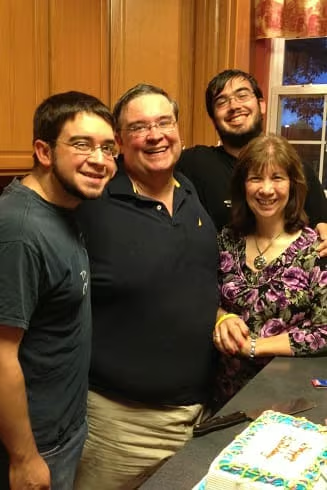
This year I celebrated my 55th birthday. It’s a birthday I looked forward to celebrating, since it also marked my 5 year anniversary as a stomach cancer survivor.
In July 2007, I was diagnosed with Stage 2 Gastric Cancer. It was a signet ring cell type which I was told was an extremely aggressive, fast growing cancer. I was shocked. I was otherwise healthy and had no family history. My only risk factor was chronic inflammation from H. Pylori the year before. I quickly met with oncologists and surgeons and one month later had a partial gastrectomy at Johns Hopkins Hospital in Baltimore. Two thirds of my stomach was removed with clear margins, but lymph nodes were positive. They recommended a standard course of chemotherapy and radiation but gave me an option for an aggressive course since I was young, otherwise healthy, and my cancer was an aggressive type. I opted for the aggressive course. In October 2007, I started a regimen of Docetaxel, Cisplatin, and 5 FU (DCF). The Docetaxel & Cisplatin were administered in the “chemo room” at the hospital. I’d then go home hooked up to a 5 FU via pump for 5 days. I had a 3 week break before the next round of daily radiation and 5 FU via the pump for 5 weeks. After a one month break, the DCF was repeated in January and February 2008. The regimen wreaked havoc on my body. I was extremely sick, had mouth sores, lost my hair, was treated numerous times for dehydration, hospitalized 3 times for a dangerously low white blood cell count, and had a blood transfusion for a very low red blood cell count. Needless to say… there were days I wanted to STOP, but the love and support of my family and friends kept me going, not to mention I had 2 teenage boys I had to live for.
The caregivers in my life were amazing!!! My husband never left my side and wouldn’t let me quit. My sons kept brave faces; they kept things light and made me laugh. My mom, brothers, cousins and friends from all over the country took turns coming to stay with us. They helped take care of the boys and the house, grocery shopped, cooked meals, did laundry, and took me to treatments. Especially during the 5 week radiation regimen when I had to go to Hopkins (an hour drive each way) every day – it was nearly impossible for my husband to take off work every day to do that. My wonderful friends and neighbors brought meals, drove the boys to their activities, and were there for moral support. My husband also had great support at work; many co-workers donated their sick time to him, so he could be home with me on the really rough days. Thanks to a wonderful medical team, support from family and friends, and the grace of God, we made it through and I’ve been cancer free ever since.
When I was first diagnosed, a very good friend told me not to waste my “nows” worrying about the “what-ifs” and that someday this experience may be something I will be grateful for having. Her words resonated with me. I lived in the present (probably for the first time in my life) and I am indeed grateful for the experience and especially grateful for the outcome. Not only did I learn to live in the present, which is such a gift in itself, but I learned to slow down and savor the moment. I discovered meditation and guided imagery which also helped combat some of the side effects of treatment. I discovered yoga and learned inner peace. I realized I was stronger than I thought I was, and how truly fortunate I was to have so many friends and family members who truly cared about me. Their supportive energy helped carry me through the rough times and continues to give me strength. My advice to patients in treatment is to accept help from friends and family, and do your best to relax your mind.
Now I want to give back. There is wonderful support out there for certain types of cancer and for general cancer information, but support specific to stomach cancer was very hard to find. I learned of “Debbie’s Dream Foundation: Curing Stomach Cancer (DDF)” in October 2011 at a follow-up visit with my surgeon. He suggested I check it out if I still needed support of any kind, or if I felt I could get involved and help others. It was exactly what I’d been looking for. I am honored to be part of such a wonderful organization. It is filled with wonderful, caring, and compassionate people. Being part of DDF has given me the opportunity to provide support to stomach cancer patients through the Patient Resource Education Program (PREP) and to start a local chapter here in the Baltimore area helping to raise funds for research and to create awareness. I feel truly blessed to be a survivor and to work with such an amazing team of people.
Modal Title
My name is Daniel, and this is my cancer story. On Sunday morning, October 31, 1994, as soon as I got up I started getting heart palpitations every time I moved, and every time I tried to get up I got very dizzy. I decided to wait, thinking that maybe it would go away, but it didn’t. Later on in the afternoon I called my wife at work and told her what was happening to me. She came home from work and convinced me to go to the hospital. Believe it or not, I did not want to go. A few hours after I was admitted, I had a blood transfusion. My blood level had been at 5, and the doctor told us that if I would have waited one more hour I would have died. The next day I was diagnosed with stomach cancer. There was a bleeding ulcer on top of a very deeply invasive aggressive tumor. One week later I had a total gastrectomy. I was only 27 years old at that time; I will be 48 this year. After the surgery I had six weeks of chemo and radiation just in case there were any microscopic cancer cells left after the surgery. Fortunately, the cancer had not spread to other organs, so I was extremely lucky. After that I was fed through an IV that I carried around with me in a backpack for about nine months. During this time I was trying to learn how to eat all over again; I could not mix liquids and solids. The eight or nine months after the surgery were worse than having the cancer itself! That time was one of the hardest times of my life; I didn’t know if I could make it without a stomach. I was very depressed and tired of drinking Ensure until my doctor pulled the IV and I either sank or swam.
After the IV I was really very optimistic. I decided I was not going to worry about how many calories I was taking in daily or how much liquids; I just programmed myself to eat and drink every time I got a chance during the day and that is what I have been during until now. I eat anything I can tolerate especially meats, bread and rice. I also enjoy drinking a Sam Adams and eating ceviche at least once a month. My weight stays within 125-130 pounds; I had averaged 145-155 pounds before I got cancer. I did have another surgery in Dec. 2007 because I had developed scar tissue that caused a blockage in my intestines, and after the second surgery the abdominal pain and intestinal blockage went away. Yes, there is life after stomach cancer especially if you had a total gastrectomy. I have been married since 1992 to my wife Lori and have a little monster, Danielle, who was born in 2004. I hope this brings some light and hope to those of you who are just starting on this journey.
Modal Title
I am Rachael Cortez from Lodi, California; I am 31 years old. I was diagnosed with stage 2 stomach cancer on June 20, 2014. “Why me?” I kept asking that day. I was so healthy. I have never had anything wrong. It was a complete shock to me and my husband of almost 15 years. We wondered about whom we should tell. How would we tell our 12 and 6 year old daughters that Mommy was sick? It began in November 2013, the day after Thanksgiving, when I got home from work burping a lot and had a lot of nausea that caused me to vomit a lot. I ended up in the ER, supposedly with heartburn. I must have then gone to 10 different hospitals and doctors before I finally got referred to a GI doctor in March 2014. After several tests they finally did an endoscopy and got a biopsy of my stomach and figured out the problem. I was so weak the day before I found out, that doctors said I could have had a heart attack because my potassium levels were so low due to no food not being able to pass. I had a stent put in, so I can eat now. That was scary. My husband has been my rock through all of this. He pushes me to fight every day. I’ve done 9 weeks of chemo and was supposed to have surgery on the 19th of September but due to a power outage was rescheduled for the 17th of October. I’m so ready for this to be over. I’m a fighter, and my daughters push me every day. This has been a rough road these last couple of months, but I’m going to fight this– piece of cake. I have GOD by my side and a huge family that loves me. I have faith that all will go well.
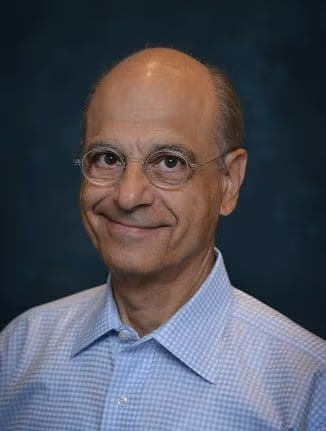
Modal Title
April 1, 2015
After fighting prostate cancer it appeared that I would resume “the good life” of a retired executive playing golf and living on the beach in Florida with my wife of 42 years. On my 67th birthday we celebrated with a steak dinner. But cramping and distention on the right side of my abdomen was the result. My primary care doctor did a sonogram which discovered gallstones and the GI doctor ordered a CAT scan, and endoscopy, which he says, revealed nothing more. I then interviewed surgeons who ordered another CAT scan that showed some potentially suspicious findings but all the doctors agreed it was time to remove the gall bladder, nothing more. Three weeks after that surgery, symptoms of cramping, gas and obstipation (intestinal obstruction) were better but not gone. I re-read the last CAT scan report but did not understand some comments, so I became suspicious and insisted that my primary care physician find a new gastroenterologist who shared my skepticism. This new GI called the Chief of Radiology who, upon challenge, amended the CAT scan report to read Linitis Plastica; a rare stomach adenocarcinoma was a possibility from the thickening of the stomach walls which had been seen all along as gastritis. There had been a misspelling in the original CAT report, which no one had caught. An endoscopic ultrasound with biopsy was performed at a different hospital with different doctors as a double check but with no expectation. While we were driving back to our home in New York, the cell phone rang when we were somewhere in northern North Carolina. The new GI doctor was calling to say, ” I never expected to have to make this call but…. Get to an oncologist right away, and have a PET scan to determine the extent of your adenocarcinoma. My wife and I pulled off the road in shock. It was early June 2013, and my CATs and endoscopy in December and February had been dismissed as only gallstones and obstipation. Now it was cancer as well? We never knew anyone with stomach cancer. Surely this can’t be good, and what if I didn’t remain skeptical after the gall bladder surgery, would I be sailing along with this monster growing inside of me? Before the gallstones diagnosis, I had weighed 220 lbs; I am now 200.
My story continues with excerpts from the emails that I had sent to my support network to keep all informed.
6/17/2013
News
My family and friends,
I am sorry to report to you that I have been recently diagnosed with stomach cancer. Last Friday we visited Roswell Park Cancer Center here in Buffalo to seek a second opinion of the diagnosis and a treatment plan. The doctors there confirmed the diagnosis but said that they needed to perform more tests to determine the staging (spread) or the grading (aggressiveness). Without a complete diagnosis they could not recommend a certain treatment plan nor give me my prognosis.
So they scheduled me for an exploratory surgery on Wednesday at Roswell after which they will send more specimensto their pathology lab for further evaluation. I should have a clearer picture by this coming Friday.
I do know that it is serious and at least somewhat aggressive, and although the detection was not as early as you would hope, there is some reason for optimism that it was caught early enough.
6/20/2013
My Family and Friends,
Yesterday went about as well as we could have expected. Sorry I couldn’t write sooner but the general anesthesia left me loopy for most of the day and I had to sleep it off.
Although the pathology report is still being created in the Roswell Lab, my doctor indicated that by his internal observation with the most modern technology, the cancer doesn’t appear to have spread outside the stomach walls neither on the inside nor the outside.
This part is very good news because this means that “it” is treatable. But because it covers about 60% of the stomach wall, it will be a hard fight. Still, with many reports and doctors’ meetings during the next week, the treatment plan tentatively looks like chemo, then surgery, and then more chemo.
Get ready for “skinny Nelson.”
6/25/2013
Chemo Starts Tomorrow
Friends and Family,
All of the tests are in, and my diagnosis is now known to the extent it can be known before surgery: Stage 2, non-metastatic stomach cancer. Specifically I have a rare form known as linitis plastica (LP), a diffuse, infiltrative type which is aggressive, but in my case, presents as if it is trapped in the stomach wall and, therefore, very hard to detect. Again, not early, but early enough. My treatment will be 9 weeks of chemo (ECX), starting tomorrow at Roswell, followed by a four week break, then surgery, a full gastrostomy in late September, with a 7-10 day hospital stay, some rest and then 9 more weeks of chemo. The prognosis from the doctors is: “The intent is curative,” a statement that gives me much hope.
Although I face a long, hard battle, most people with a diagnosis of LP don’t hear those words from their doctors since they present too late. I am seeking a second opinion from the Cleveland Clinic as to the surgical aspects of this plan only. Since that takes time, I chose to start the chemo immediately at Roswell since time is of the essence, and this treatment phase is considered “standard of care.”
8/12/2013
Checking In
Chemo brings me up and down and I have had some bad times. I currently have a bad case of hand foot syndrome, making it hard to walk. But otherwise I feel good today and am heading down to the harbor front for lunch. Chemo resumes on Wednesday, and we fly to NYC one week from today. Patti, my wife, continues to prepare several healthy meals per day and many liquid protein shakes.
8/14/2013
Altered Course
Today I was to start the third and last of my three cycles of chemo. Unfortunately, I have been interrupted for the second week in a row by side effects. After completing 21 consecutive days to complete cycle one, the second cycle got off to a rough start. Days of persistent nausea were then followed by hand foot syndrome (extreme redness and heat in the feet and sore and chipped / sore fingertips), which truncated the second cycle to two weeks with another doctor ordered week off due to toxicity.
Yesterday as I approached my third cycle, my newest blood tests revealed extremely low magnesium levels and once again low white blood cells. I needed to take another week off to take neupogen injections and a massive dose of magnesium. I thought I was tough, but this thing is putting up a real fight. Whatever it takes, we’ll get it back!
Undaunted, we leave for NYC on Monday for my appointment at Memorial Sloan Kettering on Tuesday with the surgeon who validated the laparoscopic, less invasive procedure. When I return, I will start the third and final cycle of chemo on August 21st.
Nelson Civello – Florida
8/31/2013
Surgery Decision Made
Dear Friends and Family,
I know it has been a long time since I first wrote and since I last wrote. I was diagnosed on June 4th and now am finalizing my 10th week during this neo adjuvant (pre-surgical) chemo regimen.
But I have this week decided to have my surgery on September 26th at Memorial Sloan Kettering in NYC.
The doctors there have multiple times the experience in my kind of surgery than any of the other doctors in any of the hospitals I visited and perhaps do more volume of gastric surgeries than any doctors elsewhere in the country.
The chemo has been as difficult as billed, and I think I have faced virtually every side effect so far. I am in the last week of this round. We won’t meet the very aggressive goals set by my doctors at the beginning of chemo, but I am certain that I’ve completed enough therapy that it has helped arrest the tumor to set up the surgery.
Patti and I will be in NYC for a bit longer than three weeks, as I plan to complete my first phase of recovery before I travel again.
9/21/2013
Off to NYC and Sloan Kettering
Dear Friends and Family,
The time has come. I have finished 10 weeks of chemo and experienced almost every known side effect. This week I had multiple tests including various cardiac tests and a CT scan. Everything checked out, and I am still a good candidate for surgery, which is good news. Surgery is scheduled for this Thursday, and we expect to remain in NYC for three weeks to complete my recovery. We will then return to Buffalo for another 9-week course of chemo. I now weigh 193 lbs.
11/1/2013
Bump in the Road
Dear Family and Friends,
When you last heard about me I was just discharged from Sloan Kettering Hospital in NYC where I had undergone successfully a robotic gastrectomy and the pathology report regarding the apparent elimination of the cancer was very favorable. The chemo had reduced my tumor by 30% to help make this all possible. All positive!
Once I returned to Buffalo, I was finding it hard to swallow, so I was admitted into Roswell Park here for an evaluation. There they determined that there was a stricture or stenosis in my new esophageal junction, which had to be unblocked. This post-surgical complication only happens in 6-8% of these surgeries. I guess I am amongst the “lucky” ones. Roswell said that they thought they could reopen the closure over time with multiple endoscopies using a balloon catheter. This procedure requires anesthesia in the OR with full recovery. I have already had two done with minimal success because it was still early after the surgery. During this time I am limited to a liquid diet and am expected to try to prevent weight loss or face insertion of a feeding tube, which is very hard to do under the circumstances. Patti continues to prepare 6-8 liquid meals a day for me. My next procedure is Monday, and I am very hopeful that the opening will allow me at least some soft solid foods for weight maintenance. Resuming chemotherapy is on the back burner for now until I can fully recover from this complication. I am now down to 150 lbs.
4/8/2014
Good News
Dear Family and Friends,
It is hard to believe that it has already been six months since my total gastrectomy at Sloan Kettering in NYC. Yesterday I received the results of my 6-month follow up CAT scan at Roswell and the results were “no detectable signs of cancer.” What a blessing and especially when you consider that I could not take the post-surgical chemo regimen because of my stricture complication (closing of the esophagus), which has required 12 separate procedures to be stretched open. Number 13 is scheduled at Roswell for next week.
But in spite of this complication and the second, which is an incisional hernia that will be surgically repaired this summer, the big picture could not look better.
With your help and prayers, great medical care by many professionals, and my wife Patti, daughters Lauren and Sherri, I apparently have overcome great odds against a type of cancer, which almost always wins.
I am humbled by this experience and will now pursue becoming a mentor, helping and praying for others who have not been as blessed as me.
And still the stenosis kept returning, even after 22 endoscopic dilatations. It became a monthly event to go under and get “stretched,” but it would reclose in 2-3 weeks. The surgeons, endoscopists and oncologists at both Roswell and Sloan Kettering believed that the remediation had failed and I would have to submit to a “Revision” surgery wherein the anastomosis would have to be taken apart and rebuilt. Unfortunately, this would have to be an open surgery with a large incision and a longer and more difficult procedure.
As a last resort, my daughter researched and found a very experienced and skilled endoscopist at UCLA Medical Center, so I traveled to LA and received three very aggressive procedures which worked. The UCLA doctor saved me from an open surgery that I fought to avoid in the first instance. I am not perfect or even normal, but eating most things is now possible with behavioral modifications. I am up to 158 lbs.
11/22/2014
Medical Update
Dear Family,
As you all know by now I had a second successful follow up CAT scan in early November, which revealed that there had been no recurrence of my gastric cancer at this stage. But the CAT picked up something in the colon and a pancreatic cyst. So a colonoscopy and an MRI were ordered. The MRI concluded that there is a benign cyst on the pancreatic neck and it will be followed closely on an ongoing basis. The colonoscopy picked up an adenoma, which is a benign, slow growing tumor that is two cm in size and too diffuse to remove through a colonoscopy. Laparoscopic surgery to remove a small part of the upper colon was recommended. It is now scheduled for Dec.8th, and my hernia will be repaired at the same time. I was told to expect at least three nights in the hospital and then no vigorous activity for at least 6 weeks.
My doctors and we certainly didn’t expect this, but once again I am the beneficiary of an early detection and, yes, again grateful!
And so, on December 8th, only 14 months after my third abdominal surgery, I had a fourth. My cecum was removed (upper part of the large intestine); my appendix, which shockingly contained a previously undetected carcinoid on the tip, was removed; the incisional hernia which was the size of a baseball was fixed; and one last endoscopic dilatation for good measure was performed. I was back to 150 lbs within a week.
Today am 170 lbs, completing two full months of Physical Therapy, and ready to return to golf in mid-April. Though I am not considered out of the woods for five years, it seems that I have beaten the odds, which for stomach cancer in America are only a 20%, 5-year survival rate. This could not have been possible without my faith, family, friends, first-rate medical care, the PREP mentors of DDF and thousands of prayers.
Gratefully told,
Nelson
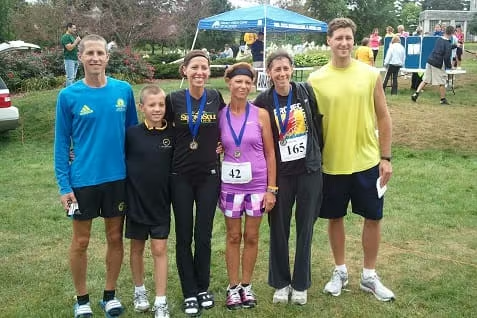
Modal Title
In January 2007, at the age of 55, I discovered that I had stomach cancer. I had always been healthy, but I had some recurring chest pain for six months or so. I even told my husband I felt like I had a hole just below the sternum. (Who knew that the stomach is located so high?) In November 2006, a large benign cyst detected on my liver was thought to be the source of my discomfort. It was deroofed. A few weeks later I asked my surgeon if it was normal to have pain still. He told me no that it sounded like an ulcer, and he ordered an endoscopy. I was shocked when I discovered that I had stomach cancer.
I was diagnosed with adenocarcinoma of the stomach (signet ring cell type) which is an extremely aggressive, fast-growing type. My only risk factor was H. Pylori. I had a partial gastrectomy (PG) at Akron General Hospital with 70% of my stomach removed. I was happy that I was able to keep 30%, as they initially projected that I would lose from 80-100%. My cancer was stage 1B (T2b, NO, MX). Although cancer had eaten almost entirely through my stomach wall, I was fortunate that it had not wholly consumed through the wall or spread to my lymph nodes or any other areas.
Following surgery, I decided to participate in a research study where I would be arbitrarily assigned to one of two rigorous programs of chemo and radiation therapy. One of the programs was the “standard” Macdonald protocol and the other substituted some other chemo drugs (EC). I was assigned to the standard protocol. The program consisted of four cycles of combined chemo and radiation treatments. The first cycle consisted of receiving 5-FU and Leucovorin at the medical center daily for one week, followed by three weeks of rest. The second cycle consisted of chemo and radiation. I had 5-FU continuously administered from a portable ambulatory pump. Also, I received radiation treatments five days per week as an outpatient. This cycle of continuous chemo and radiation treatment went on for five weeks.
A nurse would visit once per week to clean my port, change the needle, and refill the chemicals. After this cycle, I was given four or five weeks of rest. The third and fourth cycles were the same as the first cycle.
After the initial shock and despair of finding out about my cancer, I was determined that whatever it took, I was going to beat it. I was too young. I had too much to live for. My husband, my children, and my grandchildren needed me. I wanted to see my son get married and be there for all my grandchildren. When I returned home after the surgery, I took care of myself; my husband and children worked, and I was determined not to be a burden. Being active and taking care of myself was much better than lying around thinking about my problems and my pain.
The treatment was difficult, but I tried to make the best of it. I lost my hair and wore a wig. I had problems with eating and getting dehydrated, and I ended up in the hospital many times, including once in Long Beach, California, where I had gone to accompany my husband on a business trip/short vacation between treatment cycles. Note to the Long Beach Hospital nurse who bragged to my husband about how famous their morgue is (for movies filmed there). The problem was that very sick patients and their loved ones don’t want to hear about your morgue. It’s the last thing they want to see! Despite the chemo and radiation, except for the days I was dehydrated, I still tried to keep my normal life. I went out, worked, and went to basketball games, etc. Most of the time others were unaware that I had a chemo pump hooked up to my port. It was several months after my final treatment cycle that I started feeling better.
Most of my days now are very good. I still have to be careful with what and how much I eat. I must eat small meals more frequently, and even then, I still have some problems. As a result of my stomach cancer, PG and treatments, I have intermittent gastroparesis, so sometimes when I eat my stomach unknowingly is still full from a previous meal, and I have pain. I now take medication a half hour before meals which usually helps. Since my treatment, my health has been excellent, with no problems with my blood counts, etc. In fact, I had been slightly anemic most of my adult life, but I am no longer.
Choosing what to do when you find out you have cancer is difficult. One of my daughters was a nurse at Akron General Hospital. I had gone there for the surgery that deroofed the cyst on my liver. It was great to have a loved one who knew the doctors and nurses working there. The surgeon who operated on me was the one who followed up and ordered the endoscopy which detected cancer. He recognized the importance of operating quickly and was able to prioritize my surgery. We were extremely happy with him, not only on his surgical competency but with his genuine concern. However, we also are less than an hour away from the renowned Cleveland Clinic. Do you change doctors and hospitals to go to one of the very best rated hospitals or stay with the surgeon you like? Changing would probably have delayed the surgery a few weeks. With the aggressiveness of this cancer and how close it was to eating entirely through the stomach wall, I know we made the right decision. The surgery was performed on my other daughter’s birthday. Following the surgery, we chose an oncologist from Akron General Hospital as well. We did get a second opinion on the treatment from the Cleveland Clinic. The oncologist at the Cleveland Clinic agreed with the treatment protocol proposed by the Akron oncologist and said it was probably better for us to get the chemo and radiation at Akron, as it would be the same, and more convenient for us. Now, years after my treatment, Akron General Hospital has become part of the Cleveland Clinic.
Throughout all of this, I had a wonderful support group, including my husband, children, and their spouses, and grandchildren. I also had a wonderful friend who was always there for me. After I was feeling better, we began to walk together every morning. I had walked a lot with others before my cancer, but she was like me; she paced fast and long, no matter what the weather. We walked together about 8 miles every morning. Unfortunately, she passed away unexpectedly some years ago. I really miss her. I also received cards and calls from people of all races and religions praying for me. It was comforting to know that I was in their prayers.
Although my husband and children were always very athletic, I was not. I never competed in any sport. My oldest daughter and son-in-law are competitive amateur runners, and we had gone to watch them run the Boston Marathon. In April 2010, my husband signed me up for the 5K held as part of the Boston Marathon activities. I had never run more than one lap around the track, but we ran the race together. In August or September 2010, I ran my second race and then began to train. Now running is my passion. I have run numerous 5K’s, 10K’s and half marathons, usually winning or finishing near the top of my age group. My half marathon times qualified me for the New York Marathon in 2012 which was canceled due to Hurricane Sandy. I ran my first full marathon at the Pro Football Hall of Fame in Canton, Ohio. I typically train approximately 30-40 miles per week. Running is such a fun and healthy lifestyle. Runners have a real camaraderie. I have made many new friends and look forward to seeing them at the running club and the races. I would never have believed that I would be here now, as a stomach cancer survivor, a runner, and enjoying my life. After all those years of watching and cheering for my husband, children, and grandchildren, they are now cheering for me.
I wouldn’t wish cancer on anyone, but I believe that surviving it has made me a better person. I realize what is most important in life and do not let the trivial things bother me. I recognize all the love and support I have and cherish the time I have been given. I am truly blessed!
Finally, when I first was diagnosed with cancer, my husband and children did a great deal of research on stomach cancer. Unfortunately, there are a lot of support groups and organizations involved with other types of cancer, but there was much less information on stomach cancer. In fact, my husband found more information by reading research articles in Chinese medical journals, as it is more prevalent in other parts of the world. We were thrilled to discover the Debbie’s Dream Foundation organization and commend their efforts to provide support and information. I am glad that we were able to become part of that organization. Through Debbie’s Dream, we have met so many wonderful people who are fighting this terrible disease. I pray for all of them, especially my dear friends whose battle has ended.

Modal Title
My story begins in Spring 2007 with my first symptoms. I first started to feel an increased amount of fatigue and was having small amounts of pain while swallowing food. Occasional reflux sent me to my primary care physician where he initially diagnosed my symptoms as stress and gave me a proton pump inhibitor (PPI) to help with the reflux. A few months later, I went back with worse symptoms than before and was tested for an ulcer that came back negative, so doctors gave me more of the PPI. Being 37 years old, having a new baby, a new job and other pressures in my life were red flags for stress, but not stomach cancer.
In January of 2008, I encountered a rough night and needed to see the doctor, but it was too early in the morning. I decided to go to the emergency room where over the next eight hours they discovered I was anemic, then a chest scan showed a mass at the GE junction to my stomach, to having a conforming endoscopy reveal that I had cancer. There was slight swelling in my pancreas, so they were unsure if it was stomach cancer, pancreatic cancer, or both. I was diagnosed with stage IIIB stomach cancer and needed to have my stomach, spleen, half of my pancreas, and a third of my esophagus removed. The next three weeks were filled with the hospital, oncology, and GI doctor meetings before the surgery date was set for February 6th.
Surgery appeared to go smoothly, but within 48 hours I had become septic and was announced: “Code Blue,” ending in emergency surgery to fix a leak. Waking up seven days later after being sedated and on a breathing tube was a big challenge. After experiencing excruciating pain and hallucinations, followed by consuming vast amounts of pain meds, I was finally released from the hospital 30 days later and re-entered the world as a wounded 38-year-old man addicted to painkillers. Marred, and with a 1-year-old daughter, there was a lot of stress and pressure on everyone.
Chemo and radiation followed my surgery, and I proceeded to drop down to 95 pounds. That amount of weight was too much to lose, so I had to start on total parenteral nutrition (TPN) through a PICC line inserted in my arm to get nutrients. The coming year was a tough one with ER visits for dehydration, bowel blockage, CT and PET scans and an addiction to pain medication that was getting out of control. The fear of dying coupled with my addiction impacted my marriage. We ended up getting a divorce, and I had to go to rehab twice.
So, even though the first five years were miserable, these past five years have been the best. I no longer get scans nor do I see my doctor very much. I got remarried to a high school friend this past February, my daughter is 11 and we have the most fantastic relationship, and I’m as happy as I’ve ever been. Not to say that I’m all that great or life is easy, but I’ve accepted my skinny body, discomfort, eating, and all of life’s smaller challenges that allows me to be incredibly grateful and happy in the present.
I’ve been to DC, meeting with congress and senate members and helping support gastric cancer and Debbie’s Dream Foundation (DDF). I am also part of DDF’s Patient Resource and Education Program (PREP), and I’m always willing to help give hope and inspiration to those struggling, whether early on or years after recovery.